
The world of running shoes can seem overwhelming, there are so many brands with many different styles and prices of shoes- how are you ever expected to know which show is right for you? Picking the right running shoe might be daunting, but it doesn’t have to be. The secret: most running shoes are VERY similar. There are really only a few options that you need to think about when buying your next shoe.
Rules for Choosing a Running Shoe
Rule #1: Price is not everything. For the most part, the price reflects how new the shoe is, not how good the shoe is. Yes, there is fancier foam in the new shoes and the “game-changing” new stability technology but when it comes down to it, most of that is just marketing. There are many great running shoes that are in the middle of the price range that will suit you just fine. Find a shoe that is right for you, and don’t worry about if its not the most expensive pair. You really can’t go wrong with any shoes from Asics, Saucony, New Balance, or Hoka.
Rule #2: Know your feet. Knowing your foot is the biggest thing that you can do when picking a new running shoe. The biggest things to know are how wide is your foot, how stable is your foot, and how does your foot like to land when you run.
Knowing how wide your foot is will make for a much more comfortable fit. You want your shoes to fit snugly without being overly tight or overly loose. The general rule of thumb is when you tie up your shoes as tight as you like them to run, you should have 2-3 finger widths between the laces of the shoe. If there are less than 2 finger widths, you need a narrower shoe. If there are more than 3 finger widths, you need a wider shoe. Shoe companies make narrow and wide shoes, and some brands will also run on the narrow or wide side. With your shoes tied you should have ½ a thumb width of space past your big toe, you should be able to wiggle your toes comfortably, and your heel should not slip as you walk/run.
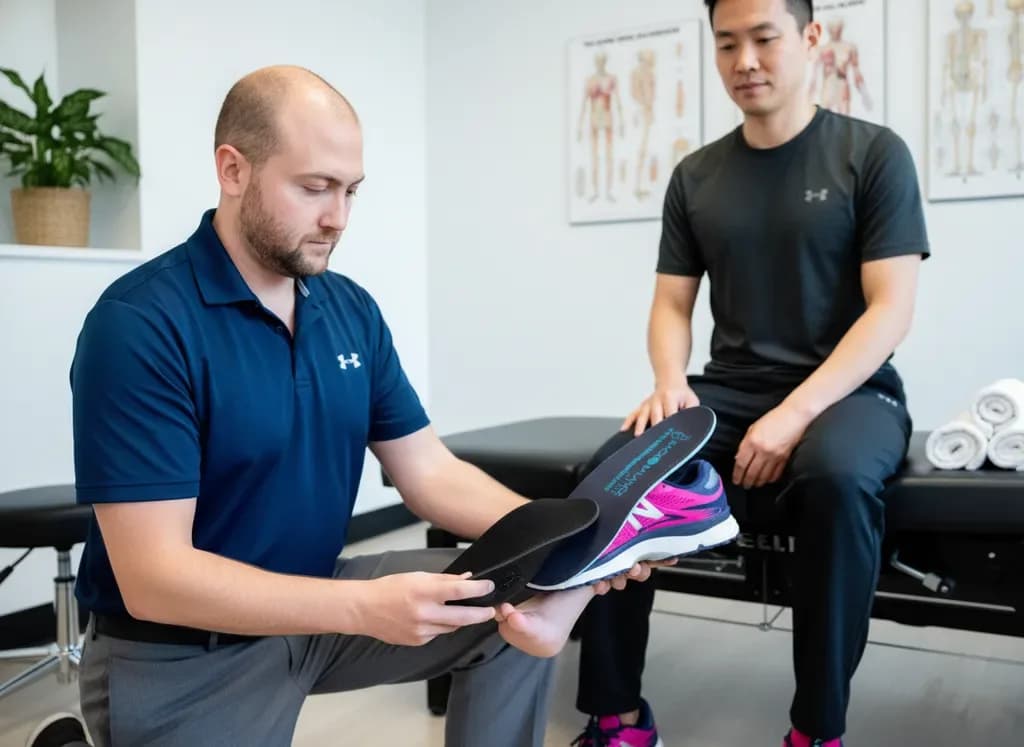
How stable your foot is will determine the level of support you are going to need in your shoe. Consider this when picking a running shoe. If you have a stable foot that stays neutral while you run, you should get a neutral shoe. If your arch caves in while you walk or run, you are going to want a shoe with arch support. You can tell how much support a shoe has by the density of the foam on the inside arch. The harder the foam, the more support. Most brands make the arch support a different color if it is there.
Lastly, knowing how your foot likes to land when you run will determine how much heel to toe drop you are going to want. The heel to toe drop is how much higher off the ground your heel is compared to your toe (eg. stellos have a massive heel-toe drop, slippers have zero). If you run on your heels, you are likely going to prefer a larger heel to toe drop (10+mm). If you land on your toes, you are going to like less toe drop (<6mm). Most “average” running shoes are in the 8-10mm range.
Rule #3: Shoes don’t last forever. Even the best running shoes aren’t made to last forever. The foam gets less forgiving, the materials stretch out, and the sole starts to wear. You would be surprised how much havoc old running shoes can wreck on your feet. On average, running shoes are made to last 500 miles or 800km. If you are running 3 times a week, averaging 5km per run, you need to replace your shoes once per year. If you are training for a marathon, that is going to be more like every 3-4 months.
Comparing Three Running Shoes
Asics Gel Nimbus 24

Width: Standard
Heel-toe drop: 10mm
Support: Neutral (has arch support but relatively soft foam)
Weight: 10.2 oz
Use: everyday runner
Asics Metaspeed Edge+

Width: Standard
Heel-toe drop: 5mm
Support: None
Weight: 7.4 oz
Use: racing shoe
Asics Gel Kayano 29

Width: Standard
Heel-toe drop: 10mm
Support: Maximum (hard foam arch support)
Weight: 10.5 oz
Use: Running shoe for overpronators
More Running Resources
Read some of these links for other information in our running series
You can also book an appointment with us online HERE
Related reading: Is Massage Therapy in Toronto Different in the Spring Months.