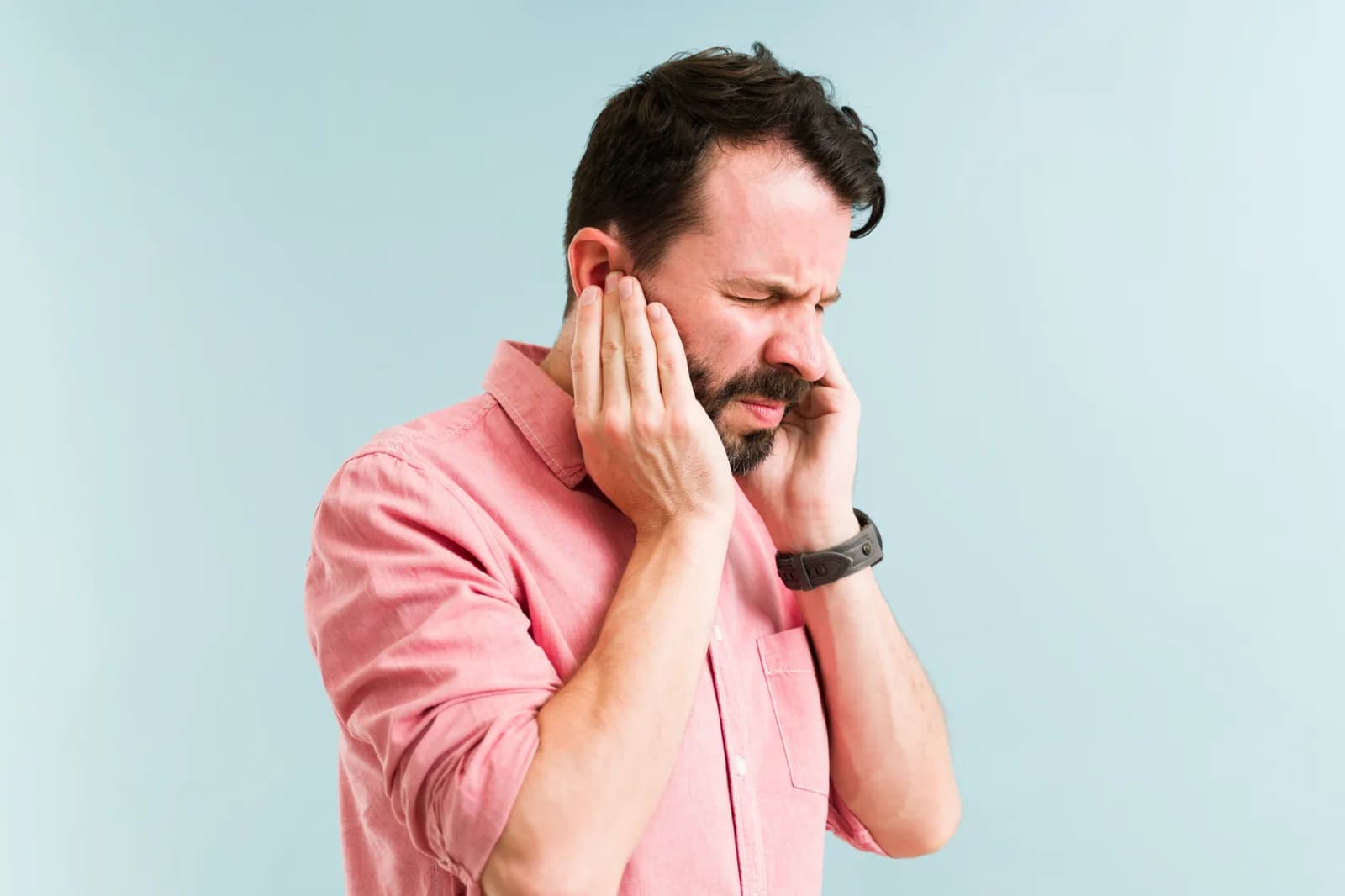
Have you ever had a ringing noise in your ear that only you could hear? Well you are not the only alone. This is known as tinnitus, an inner ear ringing without the presence of an external wave source, and 10-15% of adults will experience it at some point in their life. Besides a high pitch ringing noise, tinnitus can also present as hissing, static, buzzing, whooshing, pulsing or dial tones. It can be present in one ear or both ears, be constant or sporadic, and caused by various conditions such as a mild traumatic brain injury.
Different types of tinnitus exist, with the following being a few examples:
Subjective Tinnitus
The most common type of tinnitus, caused by an exposure to loud noises. The inner ear noise will start and stop randomly, typically lasting 3-9 months after exposure, while severe cases may never fully resolve.
Sensory Tinnitus
This is due to dysfunction from auditory disorders, such a Meniere’s disease. In this example, fluid builds up within the inner ear causing issues such as dizziness, hearing loss and tinnitus.
Somatic Tinnitus
Somatic tinnitus is related to head and neck movement or poor proprioception. Proprioception is the word given to our body’s ability to sense it’s location and movement in space. The symptoms will be aggravated by specific movements from the muscles, joints and other structures in the area.
Objective Tinnitus
This rare form of tinnitus is the only one where the ringing can be heard from those around you as well. It is due to structural abnormalities such as vascular deformities or involuntary muscle contractions. Thankfully, once the cause is determine, it can be quickly treated.
How is Tinnitus Diagnosed?
As previously mentioned, tinnitus can occur after a head injury. Reports have shown that it presents itself in 53% of people after traumatic brain injury, with 92% of patients experiencing some form of auditory dysfunction. A guideline has yet to be developed that outlines the diagnosis and treatment for tinnitus caused by head injury. For now, doctors base the diagnosis on patient symptoms of ear or head noise with the lack of external source. The symptoms last at least 5 minutes and is experienced at least twice in a week. Your doctor is likely to ask you further questions to gain a better understanding of your symptoms and try to determine the exact cause of your tinnitus. This may include:
- When did your symptoms start?
- What is the character of the inner ear noise?
- What makes the symptoms better and worst?
- How much hearing loss are you experiencing?
- How much has this affected your daily life and mental health?
- Have you noticed any other new symptoms?
What Caused my Tinnitus?
We do not know what causes tinnitus in those who experience mild traumatic brain injuries. What we do know is that this type of injury causes forces to pass through all the structures in your head, which includes the inner ear. This force is likely some damage. The ear is an area of the body with many nerves that relay information about the sound waves that enter our ears. Based on this understanding, researches have developed five potential mechanisms leading to the development of tinnitus.
Sensorineural Hearing Loss
When the nerves in the ear or any of the structures that surround them get damaged, they become incapable of sending information to the brain. The nerves then become hyper-excitable in an attempt to pick up any signal. This could result in signals coming from other nearby neurons, generating spontaneous ringing.
Labyrinthine Concussion
Our inner ear contains a structure known as the labyrinth. It is composed of the cochlea, the semicircular canals, and the vestibule, which are important for proper sound processing and balance. If this structure is damaged, you can expect to experience hearing loss, dizziness and tinnitus. When the labyrinth is the cause of tinnitus, it is more common to have symptoms only on one side of the body, developing immediately or in the coming hours/days post injury.
Ossicular Chain Disruption
The 3 smallest bones in our body are in our ears and are called the malleus, incus and stapes. Their job is to vibrate in response to external sound waves to convey that information to the labyrinth in the inner ear. When any of these bones are injured, one can potentially experience hearing loss and tinnitus.
Musculoskeletal Disorders/Dysfunction
Musculoskeletal conditions can have a negative effect on tinnitus. The mechanism for this is not fully understood but there seems to be a link between the nerves that go to our muscles/joints and our auditory system. Common musculoskeletal conditions that can bring on tinnitus are temporomandibular joint dysfunction, sternocleidomastoid strain/spasm, and forceful contraction of various head and neck muscles.
Psychological Factors
It is known that depression and anxiety are risk factors for tinnitus. Your doctor may ask you questions about your mental health and co-manage with other healthcare professionals to treat all aspects of your diagnosis.
Treatment Option for Tinnitus
It is likely that your healthcare provider will co-manage your tinitus with other medical professionals. This ensures that you get the best results by using the clinical expertise of various specialists. Treatment options can include a mix of the following:
Referral to an Audiologist or Otologist
Specialists are often recommended, especially for patients with more complex or chronic cases involving tinnitus. Audiologists and otologists are a great resource to help treat the symptoms after a head injury (ex: hearing aids for hearing loss).
Pharmacotherapy
A number of pharmaceutical options are available that can be prescribed for patients experiencing long-standing tinnitus. Talk to your general practitioner or local pharmacists to learn more about these options. Research has also shown that patients with somatic tinnitus could receive benefit with the injection of lidocaine into the affected musculature.
Retraining Therapy
This is a form of habituation therapy where individuals are acclimated to a certain stimulus. The ultimate goal is to change your emotional perception of tinnitus and decrease the signal strength from the sound stimulus. The therapy comprises of two components: sound therapy and retraining counselling. During sound therapy, a continuous low-level and non-intrusive neutral sound is used to tune out the inner ear noise. It can be thought of as ‘white noise’. During retraining counselling, techniques such as cognitive behavioural therapy can be used to help patients replace negative thought associated with their symptoms to positive beliefs.
Musculoskeletal Rehabilitation
When the neck or jaw affects tinnitus, manual therapy and exercises can be a great tool to manage the symptoms. Medical professionals, such a chiropractors, can work on the affected joints and muscles, provide stretches and strengthening exercises, and use various modalities to help alleviate the symptoms.
Looking to book an appointment with one of our chiropractors? Click the link HERE to get stated.
Interested in learning more about head injuries? Check out our blog post about concussions HERE.
Reference
- Knoll RM, Herman SD, Lubner RJ, et al. Patient-reported auditory handicap measures following mild traumatic brain injury. Laryngoscope. 2020;130(3):761–767.
- Dauman R, Tyler RS. Some considerations on the classification of tinnitus. In: Aran J-M, Dauman R, eds. Proceedings of the Fourth International Tinnitus Seminar. Amsterdam/New York: Kugler Publications; 1992:225-229.
- Sanchez TG, Rocha CB. Diagnosis and management of somatosensory tinnitus: review article. Clinics (Sao Paulo). 2011;66(6):1089-94. doi: 10.1590/s1807-59322011000600028. PMID: 21808880; PMCID: PMC3129953.
- Yang J, Peek-Asa C, Covassin T, Torner JC. Post-concussion symptoms of depression and anxiety in division I collegiate athletes. Dev Neuropsychol. 2015 Jan;40(1):18-23. doi: 10.1080/87565641.2014.973499. PMID: 25649775.
- Björne A. Assessment of temporomandibular and cervical spine disorders in tinnitus patients. Prog Brain Res. 2007;166:215–219.
- Han BI, Lee HW, Kim TY, Lim JS, Shin KS. Tinnitus: characteristics, causes, mechanisms, and treatments. J Clin Neurol. 2009 Mar;5(1):11-9. doi: 10.3988/jcn.2009.5.1.11. Epub 2009 Mar 31. PMID: 19513328; PMCID: PMC2686891.
Related reading: Is Massage Therapy in Toronto Different in the Spring Months.