Back In Balance Clinic

Pregnancy-Related Pain treatment in Toronto

Gentle, evidence-based care for pelvic girdle pain, low back pain in pregnancy, round ligament pain, and post-partum recovery. Treatment that's safe at every trimester.

(416) 660-9932
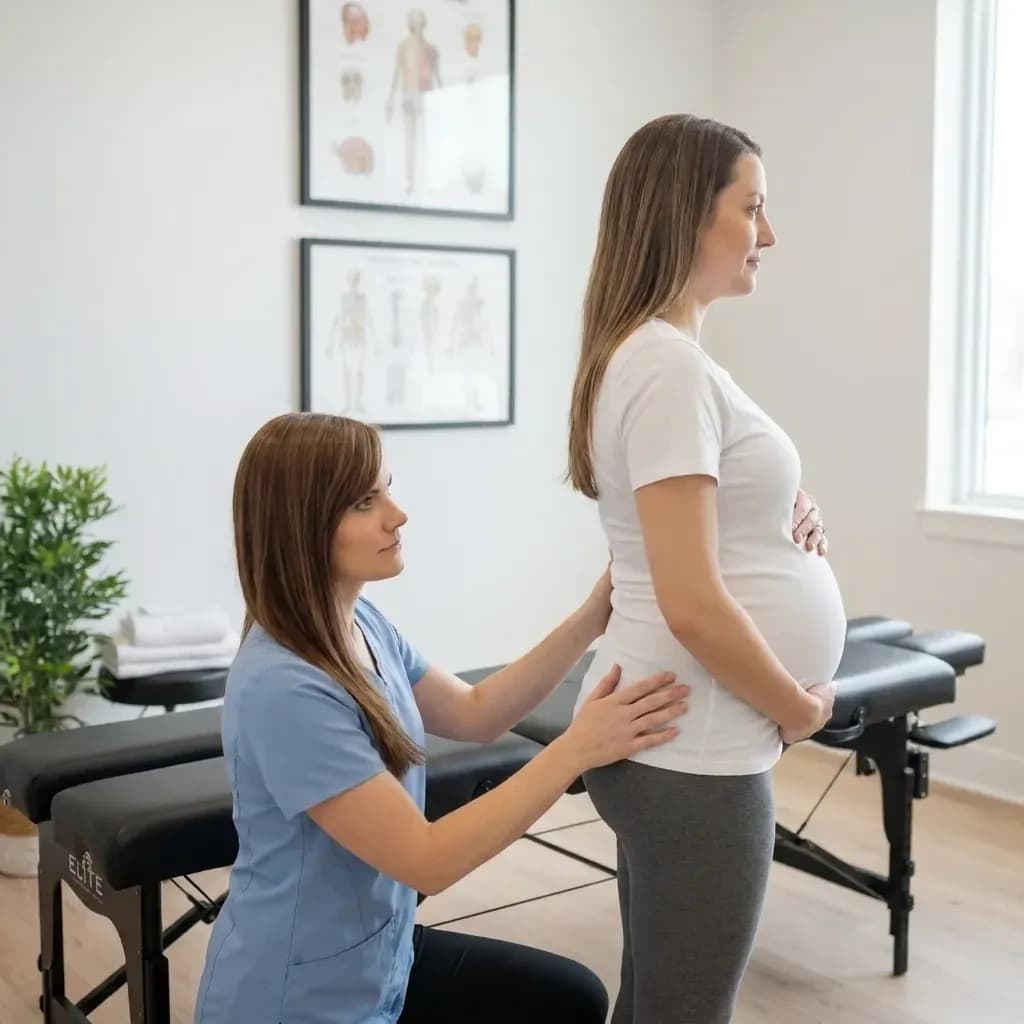
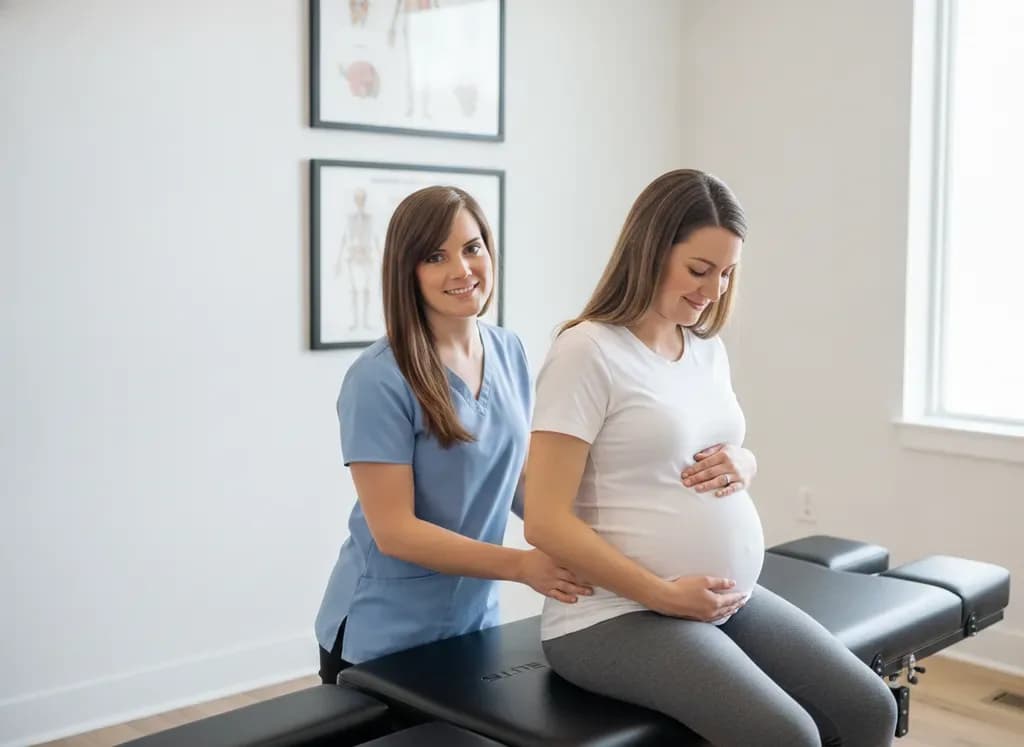
Lisa supporting a pregnant Caucasian patient lower back, seated on table edge, hand on belly — Back In Balance Clinic, downtown Toronto
Since 2009Hospital-Affiliated Spine CareWomen's HealthRunning & SportsWSIB & MVA ClaimsLGBTQ+ FriendlyDirect Billing to Insurance
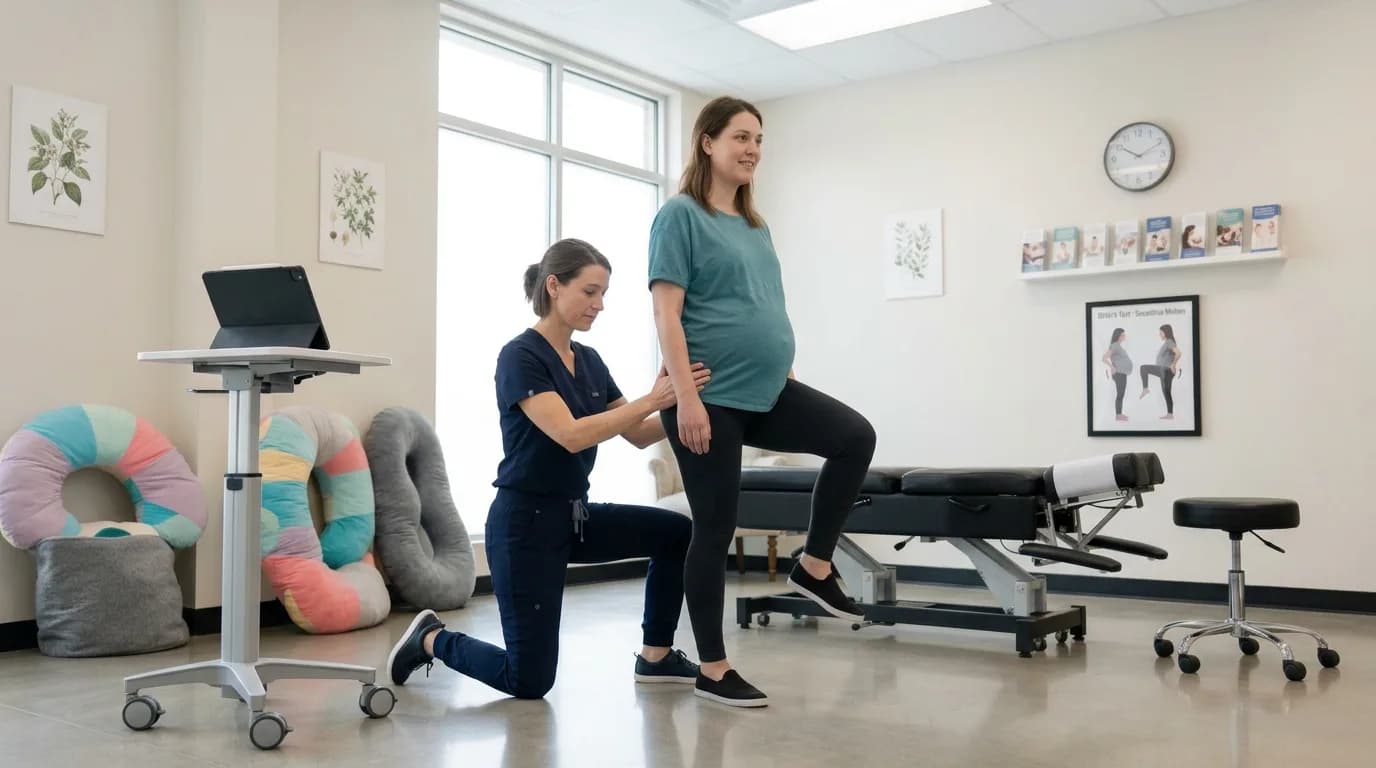
Pregnant patient standing while Lisa assesses posture/pelvic alignment from behind — Back In Balance Clinic, downtown Toronto
What it is

Pregnancy is a load test on the spine and pelvis.

Up to roughly two-thirds of pregnant patients experience meaningful pelvic girdle or low back pain at some point during their pregnancy. A lot of it is the obvious mechanical reality: hormonally-driven ligament laxity that loosens the pelvis to prepare for birth, plus a rapidly growing belly that pulls your centre of mass forward and changes how every joint shares the load. Some of it is older, quieter issues that pregnancy simply unmasks.

Whatever the cause, the reassuring part is that pregnancy-related pain responds extremely well to gentle, conservative care, and there's a meaningful difference between 'pregnancy is uncomfortable' and the kind of pain that disrupts your life. You don't have to tough out pain that's costing you sleep, dragging down your mood, or making it hard to get through a normal day. There's almost always a gentler, safer path, and the earlier we start, the easier the pregnancy tends to feel.

  • Up to 65% of pregnant patients have meaningful low back or pelvic girdle pain at some point
  • Most pregnancy-related pain is highly responsive to gentle manual therapy plus targeted exercise
  • Care is safe at every trimester when delivered by a practitioner trained in pregnancy
  • Pain that affects your sleep, mood, or daily function is worth treating, not toughing out
What we see most

The pregnancy presentations we treat most.

Pelvic girdle pain (PGP)

Pain at the front of the pubic bone (pubic symphysis / SPD), at one or both SI joints, or wrapping around the back of the pelvis. It often flares with single-leg loading, stairs, rolling over in bed, getting dressed, or getting out of a car. One of the most treatable pregnancy complaints.

SI joint guide

Low back pain in pregnancy

The classic pregnancy backache, diffuse low back stiffness and aching driven by the forward postural shift and ligament laxity. It responds well to gentle manual care plus a short daily mobility routine that keeps the spine moving comfortably.

Lower back pain guide

Round ligament pain & rib flare

Sharp, pulling sensations down the side of the belly as the round ligaments stretch, or aching under the ribs as the diaphragm and ribcage shift to make room for the baby. Soft-tissue release and positioning advice usually settle both.

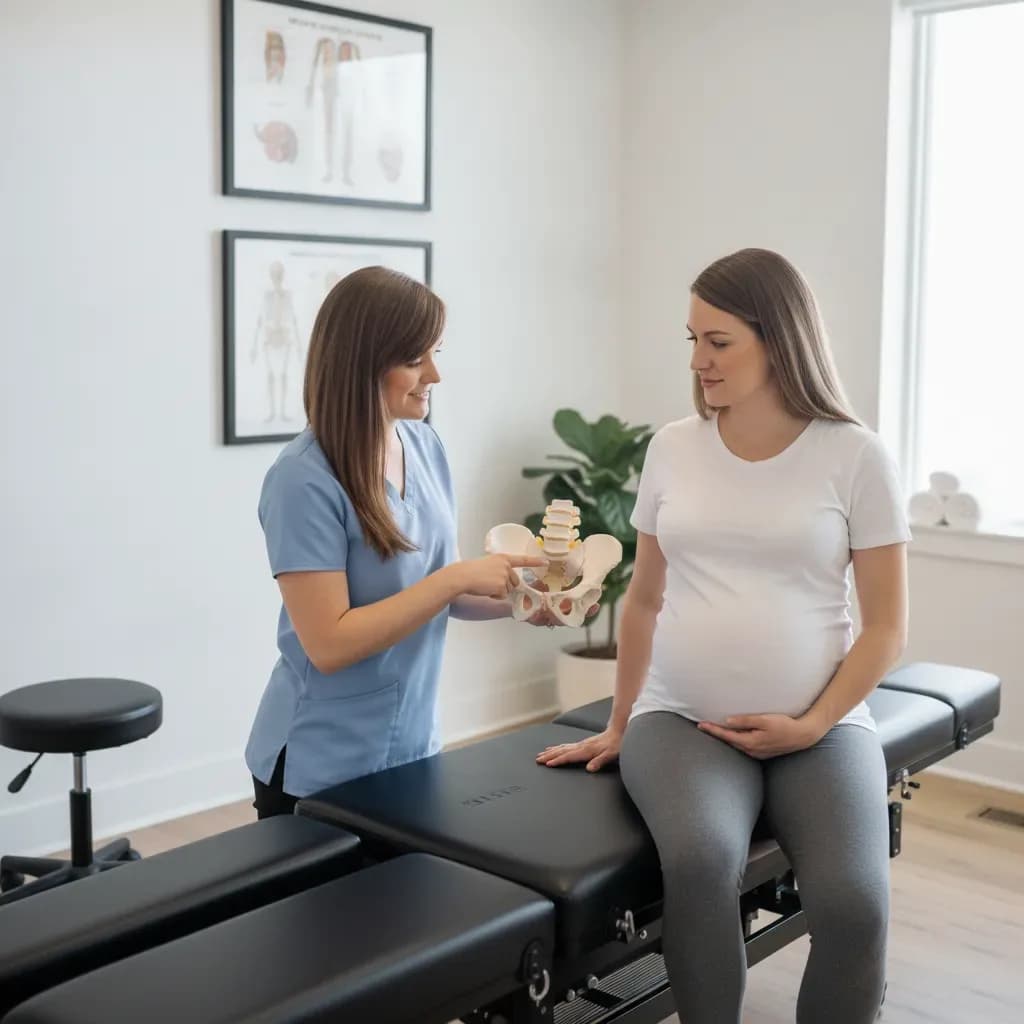
Lisa explaining pelvic changes on a model to a seated pregnant patient — Back In Balance Clinic, downtown Toronto
Why it happens

What changes, trimester by trimester.

Pregnancy reshapes how your body carries load over about forty weeks, and the pain you feel often tracks the trimester you're in. Early on, the hormone relaxin begins softening the ligaments around the pelvis and spine. By the second trimester, the growing uterus tips your pelvis forward, deepens the curve in your low back, and shifts your balance, which is often when pelvic girdle and low back pain peak. In the third trimester, the sheer size and weight of the baby, plus a stretched and lengthened abdominal wall that can no longer fully support the spine, tend to drive symptoms.

None of this means something is wrong, it means your body is adapting to a genuinely demanding task. But adaptation isn't the same as comfort. The goal of care is to share the new load more evenly across joints and muscles so your body can do what it's designed to do without the pain that so often gets written off as 'just part of being pregnant.'

  • First trimester: relaxin begins loosening pelvic and spinal ligaments
  • Second trimester: the pelvis tilts forward and PGP / low back pain often peak
  • Third trimester: weight, balance shift, and a stretched core add strain
  • Pre-existing back, hip, or SI issues are commonly unmasked by the changes
When it's not just mechanical

Pregnancy red flags, call your obstetrical provider, not a chiropractor.

Pregnancy pain is usually mechanical and safe to treat, but a few symptoms need your obstetrical provider or an emergency department, not a chiropractor. If you notice any of the following, contact your OB, midwife, or nearest emergency department right away.

  • Severe or persistent headache, vision changes, or sudden swelling of the face or hands (possible preeclampsia)
  • Vaginal bleeding or any leaking of fluid
  • Regular, painful contractions or other signs of preterm labour before 37 weeks
  • A noticeable decrease in your baby's movements
  • Severe, one-sided abdominal pain
  • Fever, chills, or feeling generally unwell
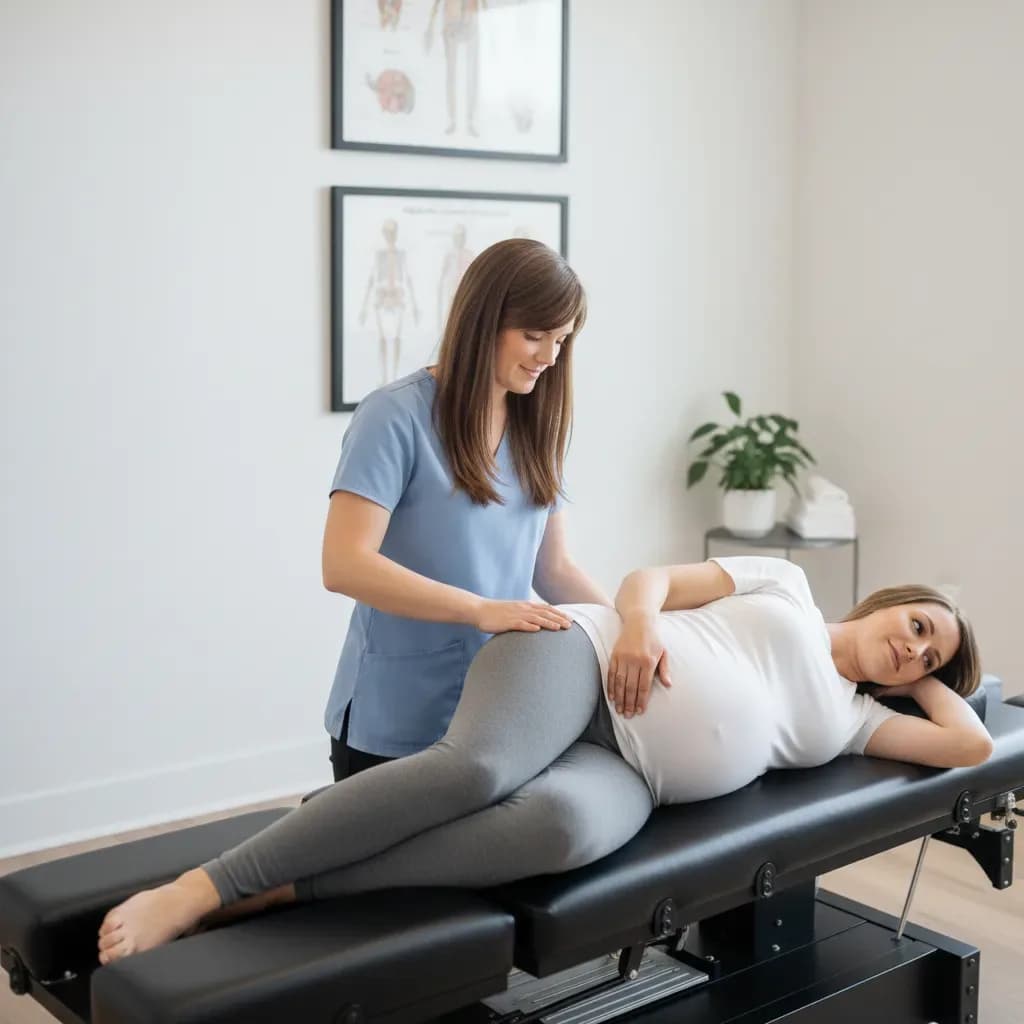
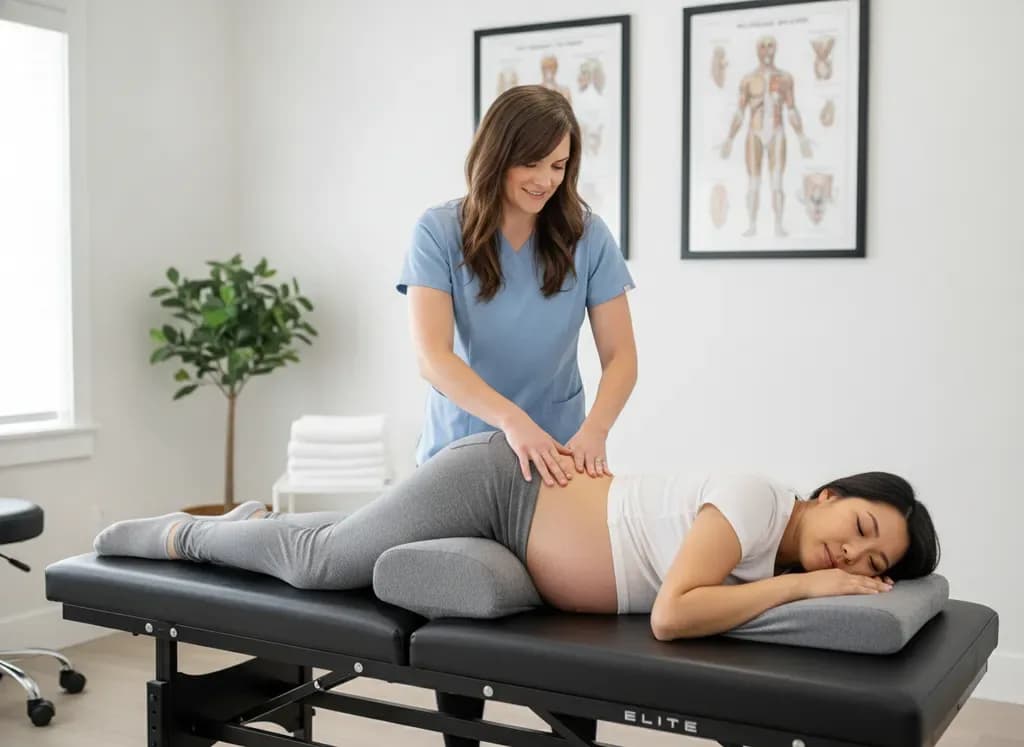
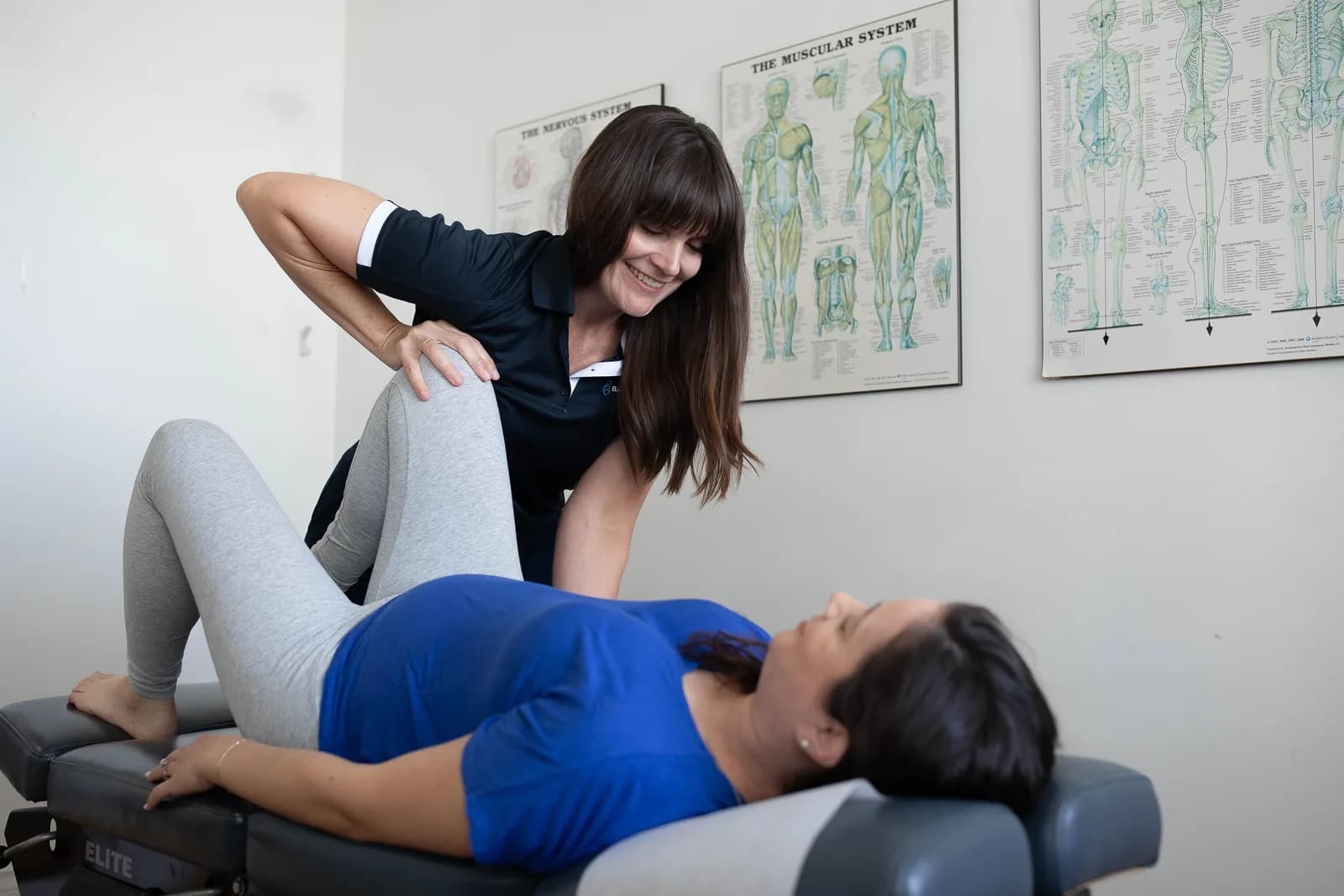
Gentle side-lying pregnancy-safe assessment, Lisa hands on the patient hip/pelvis — Back In Balance Clinic, downtown Toronto
Your first visit

What to expect when you come in.

Your first visit takes about 45–60 minutes and starts with a conversation, not a treatment table. We'll talk through your pregnancy so far, where and when the pain shows up, what makes it better or worse, and how it's affecting your sleep, work, and daily routine. From there we do a gentle, pregnancy-appropriate assessment, looking at how your pelvis and low back move and load, with everything positioned for your comfort and your stage of pregnancy.

Then we'll explain what we're seeing in plain language, answer your questions about what's safe, and, if it's appropriate, begin gentle care the same day. You'll leave understanding what's driving your pain, with a few simple things to do at home and a realistic sense of how many visits we'd expect. If anything we find belongs with your OB or midwife instead, we'll tell you and help you get there.

  • Unhurried history and a gentle, position-friendly assessment
  • Clear, plain-language explanation of what's driving your pain
  • Care that's coordinated with your OB or midwife when needed
  • Direct billing to most insurance providers
How we treat it

Gentle, hands-on care that meets you where you are.

Pregnancy-safe positioning

Side-lying positioning and pregnancy pillows so you're comfortable and supported, no prone (face-down) work past the first trimester, and never high-velocity adjustments over the abdomen.

Gentle mobilization & soft tissue

Slow, low-force joint mobilization rather than forceful cracking, plus soft-tissue release for the muscles around the hips, low back, and pelvis that are taking on the new load.

Daily exercise & mechanics coaching

A short daily plan to support the changing pelvis, plus coaching on the day-to-day: how to roll over, get in and out of a car, and sleep without flaring the SI joint or pubic bone.

Pre & postnatal care
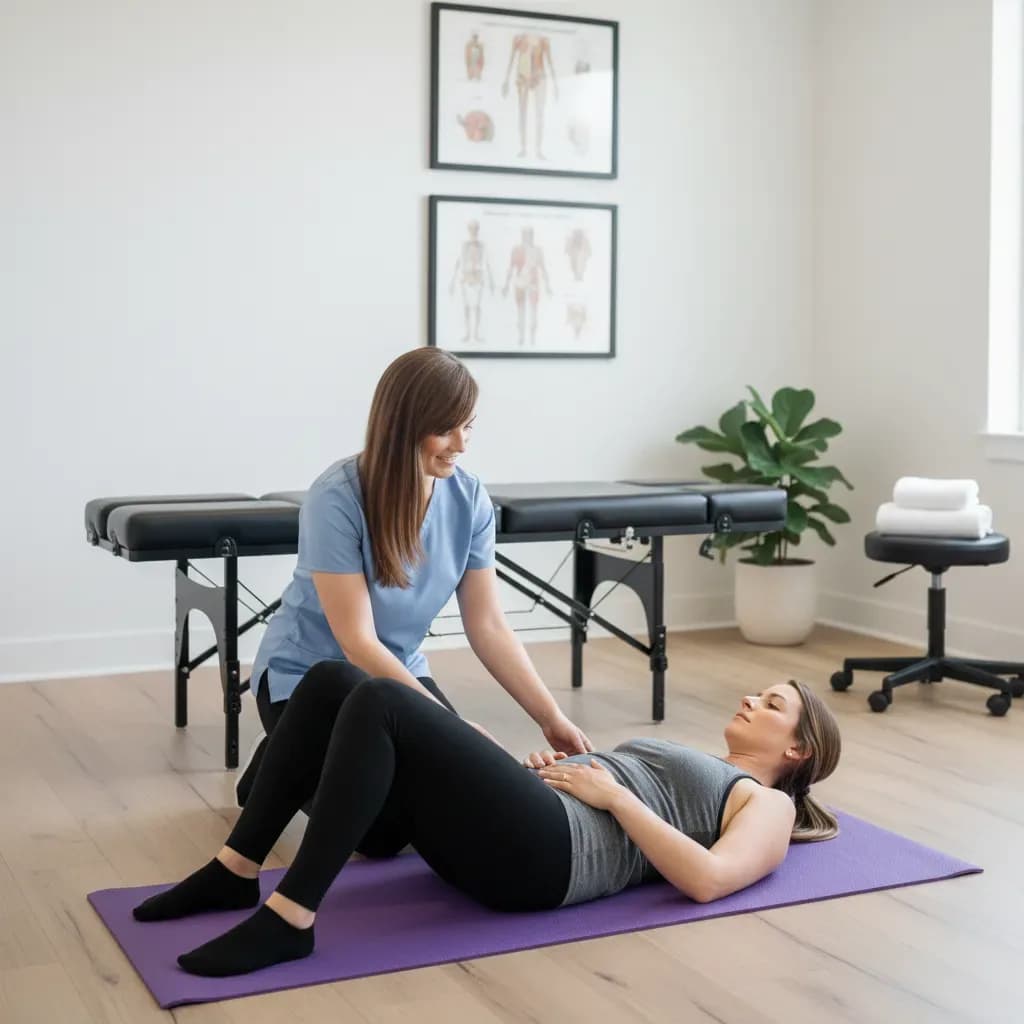
Lisa coaching a postpartum mother through a gentle core/pelvic-floor exercise on a mat — Back In Balance Clinic, downtown Toronto
Postpartum recovery

The fourth trimester deserves a plan too.

Birth is its own load event, and the postpartum body has a distinct set of needs. The deep core and pelvic floor are deconditioned after months of stretch and the demands of delivery. The abdominal wall is lengthened, and in some cases the two halves of the rectus abdominis remain separated (diastasis recti), which leaves the spine with less front-line support. On top of that, the new physical job of parenting, feeding in hunched positions, carrying a growing baby on one hip, and lifting car seats, loads the neck, mid-back, and wrists in ways they aren't used to.

Recovery isn't about 'bouncing back' on anyone's timeline. We meet you wherever you are, whether that's six weeks or six months out, and rebuild from the inside out: gentle core and pelvic-floor reconnection, a sensible plan for diastasis when it's present, hands-on care for the feeding-and-carrying strain, and a gradual, confident return to the activity you enjoy.

  • Gentle core and pelvic-floor reconnection, progressed at your pace
  • A sensible plan for diastasis recti when it's present
  • Relief for neck, upper back, and wrist strain from feeding and carrying
  • A gradual, confident return to exercise and the activities you love

All trimesters

Safe to treat

Pregnancy-safe

Positioning

Women's health

Focused care

Direct bill

Most insurers

Reviews

What our pregnancy and postpartum patients say

A few words from patients we've helped move through pregnancy and recovery with less pain.

I came in postpartum feeling like my core and back had completely checked out, plus constant neck strain from feeding. They built a recovery plan around exactly where I was and never rushed it. I feel like myself again.
R.T.· Patient review
I hadn't slept through the night in weeks because of my low back. They adjusted everything for my comfort, gave me a couple of simple things to do at home, and I finally started sleeping again. I wish I'd come in sooner.
A.M.· Patient review
Pelvic girdle pain made stairs and rolling over in bed genuinely miserable by my second trimester. The care here was so gentle, and within a few visits I could actually move again. It changed the rest of my pregnancy.
J.P.· Patient review
Related care

Care that works alongside your pregnancy plan.

Pre & postnatal care

Dedicated support through every stage, from first-trimester aches to postpartum core and pelvic-floor recovery, coordinated with your OB or midwife.

Pre & postnatal care

SI joint dysfunction

When pelvic girdle pain centres on one side of the lower back, our targeted SI joint care plus glute and core retraining is often the difference-maker.

SI joint guide

Massage therapy

Pregnancy-safe massage eases the tired, overloaded muscles of the hips, low back, and shoulders, and pairs naturally with hands-on chiropractic care.

Massage therapy

Frequently asked questions

About pregnancy-related pain

Yes, when delivered by a practitioner trained in pregnancy care. We use pregnancy-safe positioning (side-lying, supported with pillows, and no face-down work past the first trimester) and gentle joint mobilization rather than high-velocity adjustments. Care is appropriate at every trimester for the right presentations, and we coordinate with your OB or midwife when needed.

About the clinic

Book your first visit

Tell us about your pregnancy-related pain and the front desk will match you with the right practitioner.

  • Same-day appointments usually available
  • Direct billing to most major insurers
  • Prefer to call? (416) 660-9932

You’re a message away from improving your health.

By submitting you agree to be contacted about your enquiry. We never share your details.

Call