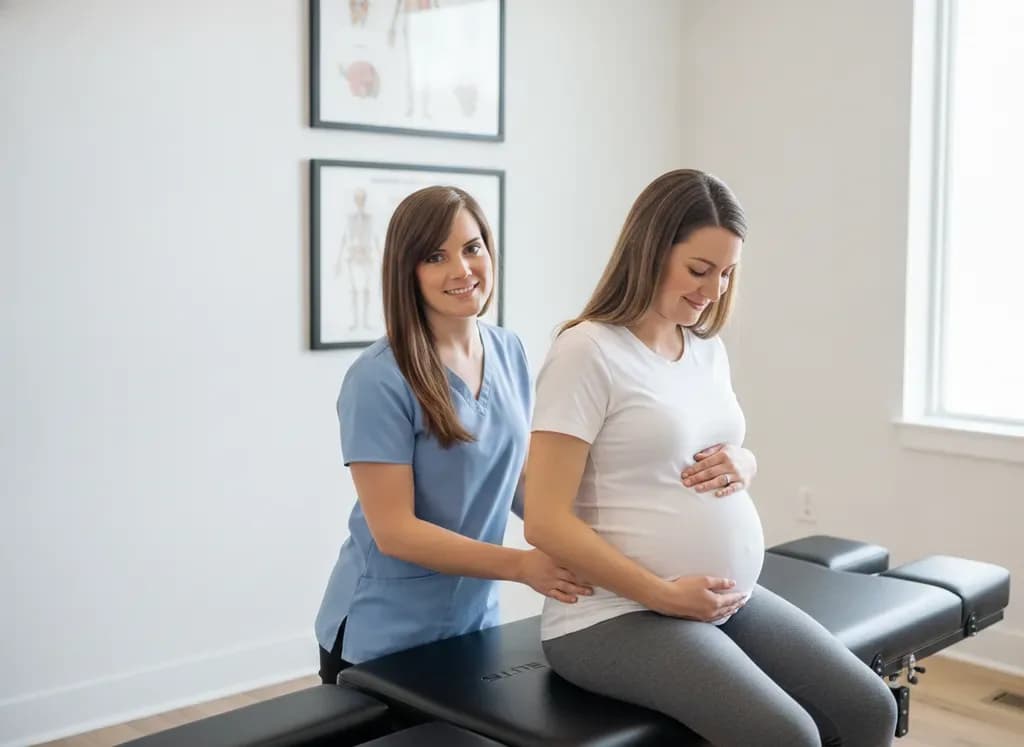
Pregnant & postpartum patients
Relaxin-driven ligament laxity and a shifting load make the SI joints vulnerable. Often persists past delivery, but responds well to pregnancy-safe care.
Pregnancy-related pain
Stabbing, one-sided low back or buttock pain that flares with twisting, asymmetric loading, or rolling over in bed. Often missed for months because it doesn't behave like 'regular' back pain.
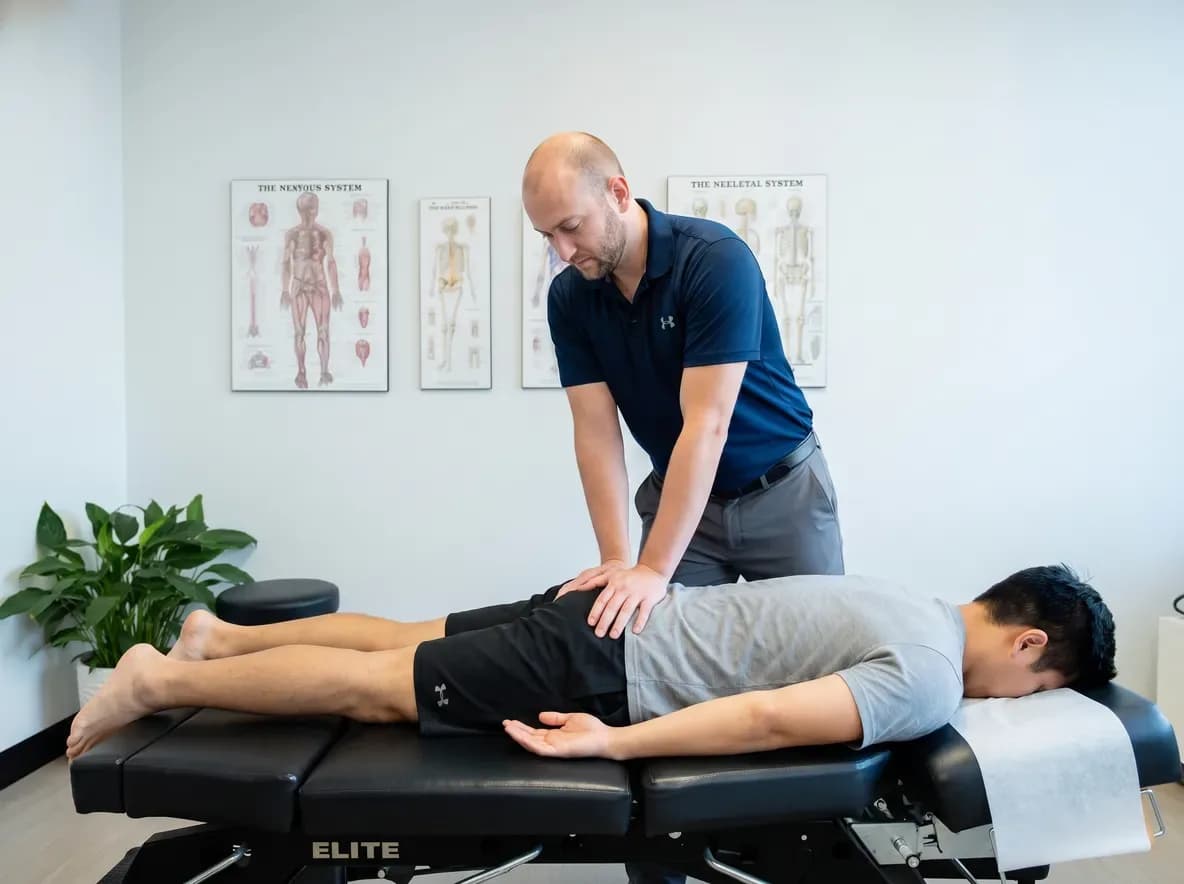
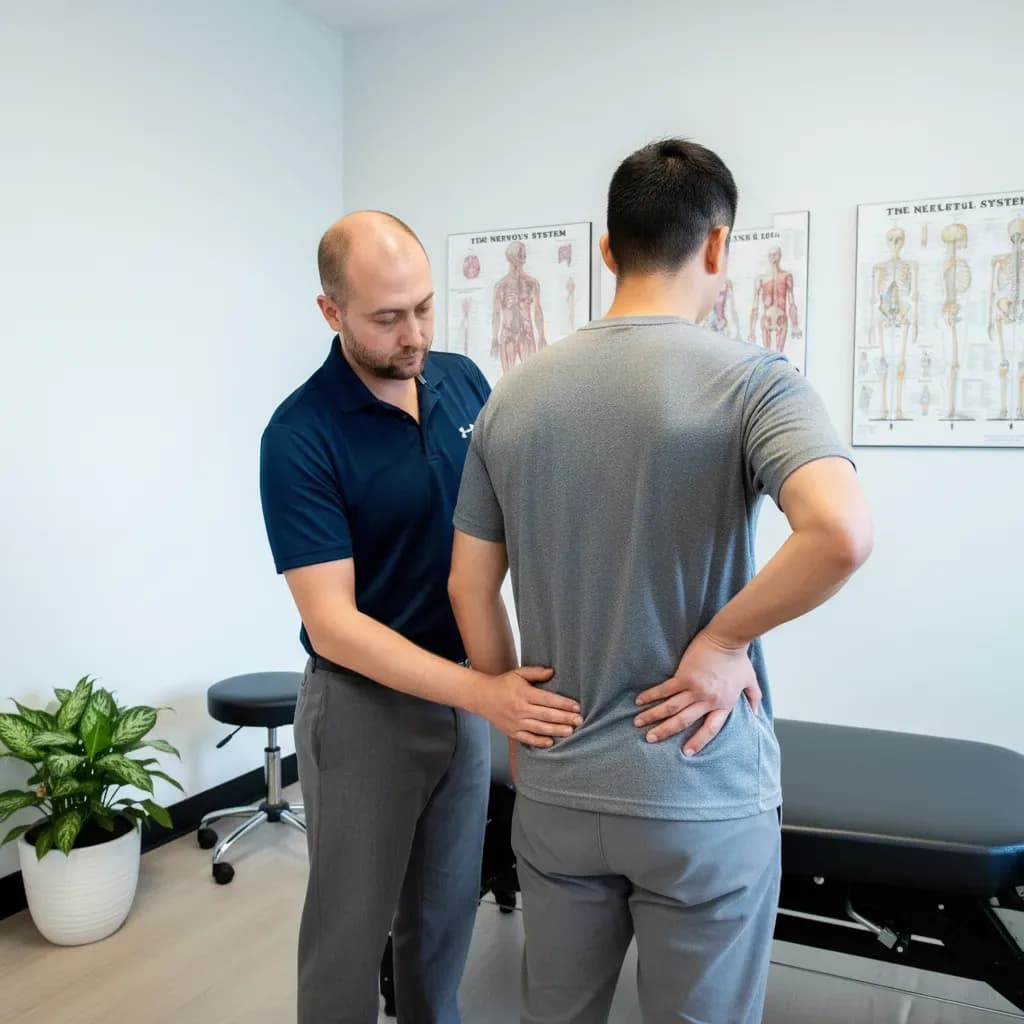
Your sacroiliac (SI) joints are where the sacrum, the triangular bone at the base of your spine, meets the pelvis on each side. They're built to barely move: their job is to transfer load between your spine and your legs every time you stand, walk, or lift. But when one becomes irritated, the pain can be sharp, surprisingly intense, and very specific.
Most people describe SI joint pain as a deep, stabbing ache just below the belt line on one side, often right at the dimple or the bony bump of the lower back (the PSIS). It can wrap around into the buttock or spread into the groin or upper thigh. It tends to flare with twisting, rolling over in bed, getting in and out of a car, climbing stairs, or standing on one leg. The good news: it almost always responds well to focused manual care and the right strengthening.
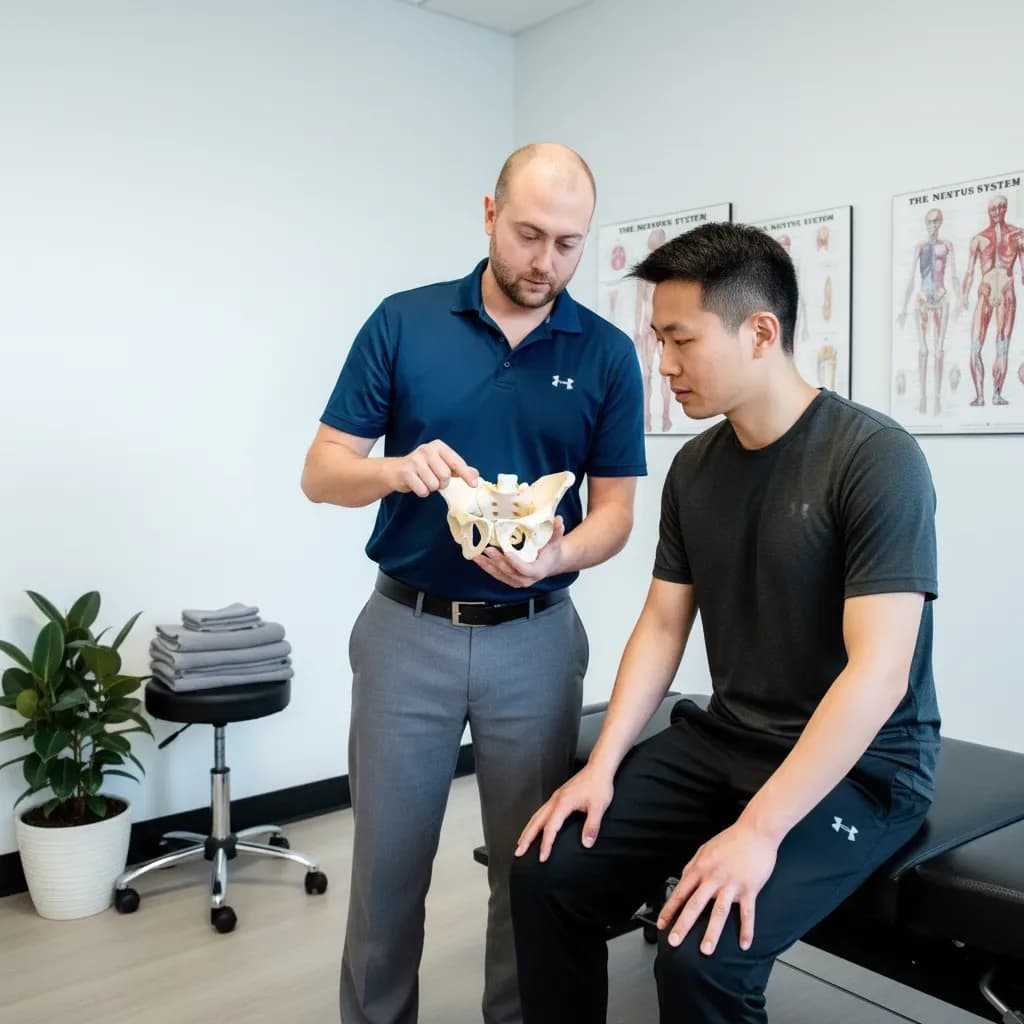
SI joint dysfunction rarely comes from one dramatic moment. More often it's the result of the joint being loaded unevenly over time, or being asked to handle more movement than it's built for. Pregnancy and the postpartum months are a classic trigger: the hormone relaxin loosens the pelvic ligaments to prepare for birth, and a growing or shifting load on a more mobile pelvis can leave the SI joints irritated for weeks or months, sometimes well after delivery.
Other common starting points are a fall directly onto the tailbone or buttock, and prolonged asymmetric loading, sitting cross-legged or with a wallet in one back pocket, long drives, one-sided sports, or carrying a toddler on the same hip every day. Sometimes the SI joint is simply absorbing the asymmetry of an old hip, knee, or low-back issue until it finally complains.
Relaxin-driven ligament laxity and a shifting load make the SI joints vulnerable. Often persists past delivery, but responds well to pregnancy-safe care.
Pregnancy-related painRunners, hockey and tennis players, and anyone with a one-sided sport. Also common after a long road trip or a strenuous yard-work weekend.
Hours of asymmetric sitting, or an old hip or back injury the SI has been quietly compensating for, until it can't anymore.
Most SI joint pain is mechanical and safe to treat with chiropractic care. But a few patterns suggest something else, inflammatory arthritis of the spine, or a possible fracture, that should be checked by your family doctor or an emergency department before booking with us.
These patterns are uncommon, most SI pain is mechanical and very treatable. Book an assessment: we're trained to look for the serious causes, and if anything points to one, we'll direct you to the right care immediately.
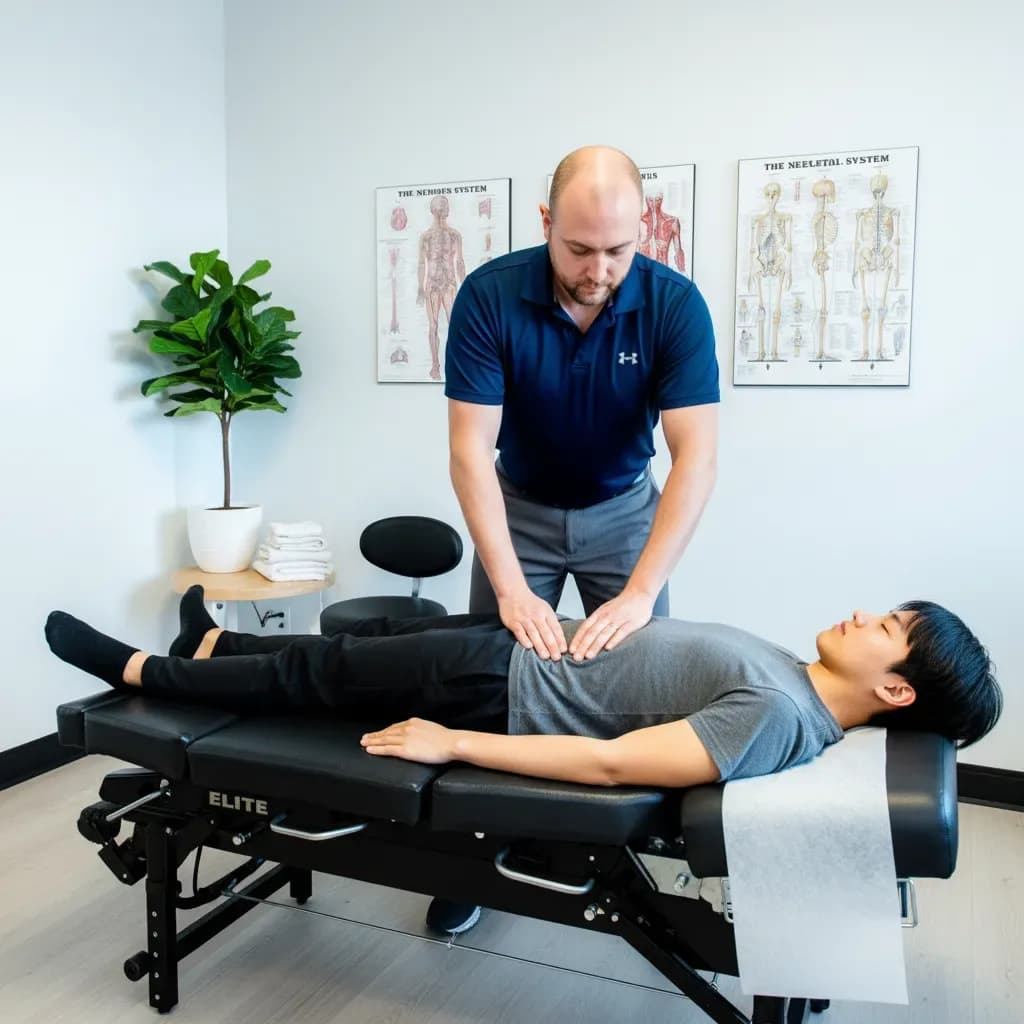
SI joint pain is often mistaken for ordinary low back pain or a hip problem, so the first visit is about getting the diagnosis right. We take a detailed history, where it hurts, what set it off, and what makes it worse, then run a focused orthopedic exam, including a cluster of provocation tests specifically designed to load the SI joint and reproduce your pain. We also screen the hips and lumbar spine so nothing gets missed.
From there we explain in plain language what we believe is driving it, rule out the red flags above, and start treatment the same day if it's appropriate. You'll leave with a clear picture of what's going on, the first set of exercises, and a realistic sense of how many visits this is likely to take.
Targeted mobilization and adjustment of the SI joint and pelvis, plus soft-tissue work on the glutes and deep hip rotators to bring the irritation down quickly.
Once the flare settles, we strengthen the muscles that stabilize the pelvis, glute med, glute max, and the deep core, so the joint stops getting overloaded.
Simple changes to how you sit, sleep, and load through the day, plus a short-term SI belt when pregnancy or an acute flare calls for it.
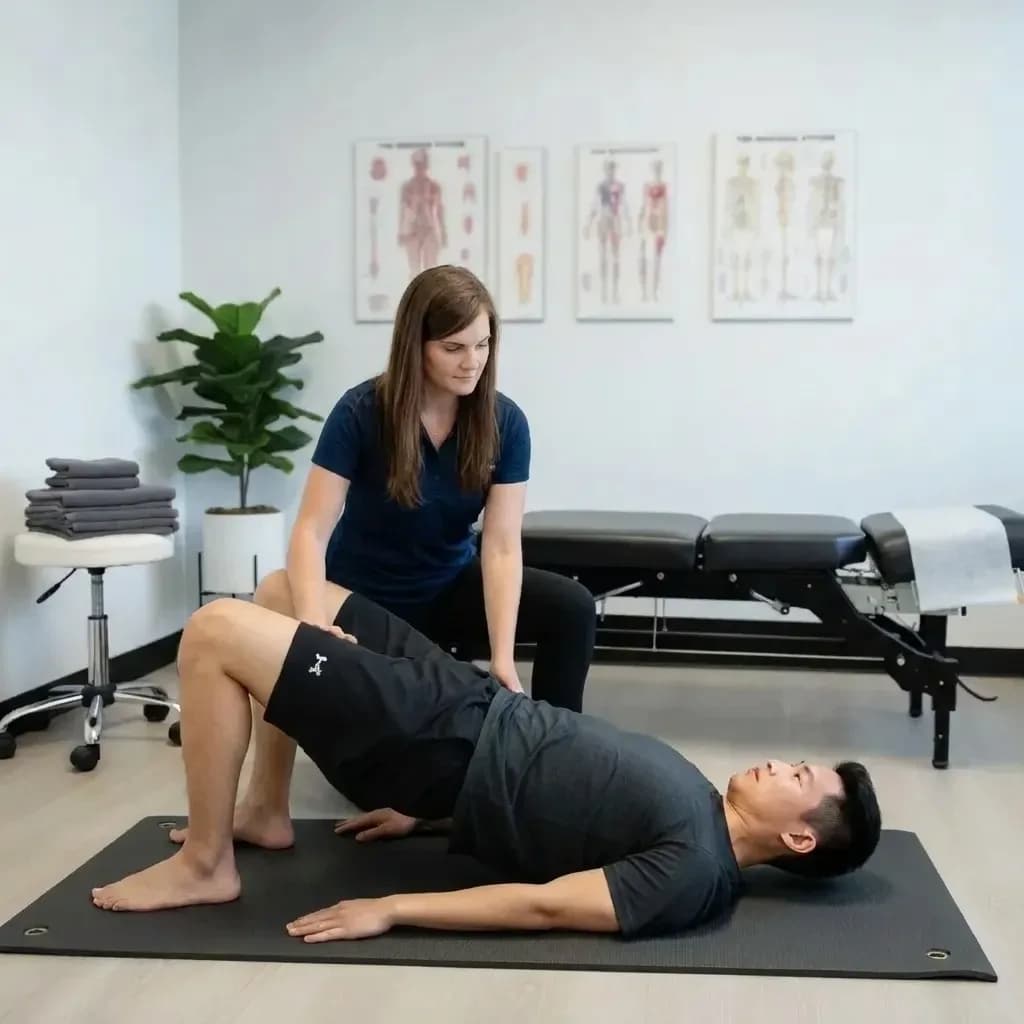
Because the SI joint is a stability problem more than a tissue-damage problem, recovery is usually quicker than people expect. Most patients feel meaningful relief within the first two to four visits as the irritation comes down, and stabilize over roughly four to eight visits as the surrounding muscles take over the job of supporting the pelvis. Pregnancy-related cases can take longer and may flare again through later trimesters, but they respond well to ongoing, pregnancy-safe care.
Our goal isn't just to get you out of this flare, it's to leave you with a short, repeatable routine and a clear understanding of your own triggers, so the next long drive, busy postpartum week, or one-sided training block doesn't set you right back. For most people, a few minutes of the right exercises a day is what keeps the SI joint quiet for good.
APP-trained
Advanced spine triage
Pittsburgh
Primary Spine Practitioner
16+ yrs
Treating Toronto
Direct bill
Most insurers
A few words from patients who finally found the source of their one-sided low back and hip pain.
“Finally a clear answer after being told it was 'just back pain' everywhere else. Once we knew it was the SI joint, the right exercises made all the difference. I'm so relieved.”
“My SI pain started after I had my baby and it just wouldn't go away. The postpartum-aware care here was exactly what I needed, I can pick up my little one again without wincing.”
“I'd had this nagging pain on one side of my low back and buttock for months and nobody could tell me why. Here they actually diagnosed it as my SI joint and the targeted exercises settled it down.”
SI joint pain is often tangled up with low back pain. If yours feels more central or radiates down the leg, start here.
Lower back painPelvic and SI pain during and after pregnancy, treated with gentle, pregnancy-safe protocols.
Pregnancy-related painOur full assessment-first approach to spine and pelvis problems, led by Dr. Serrick.
Advanced spine careWhat we'll typically pull from when we put a plan together.
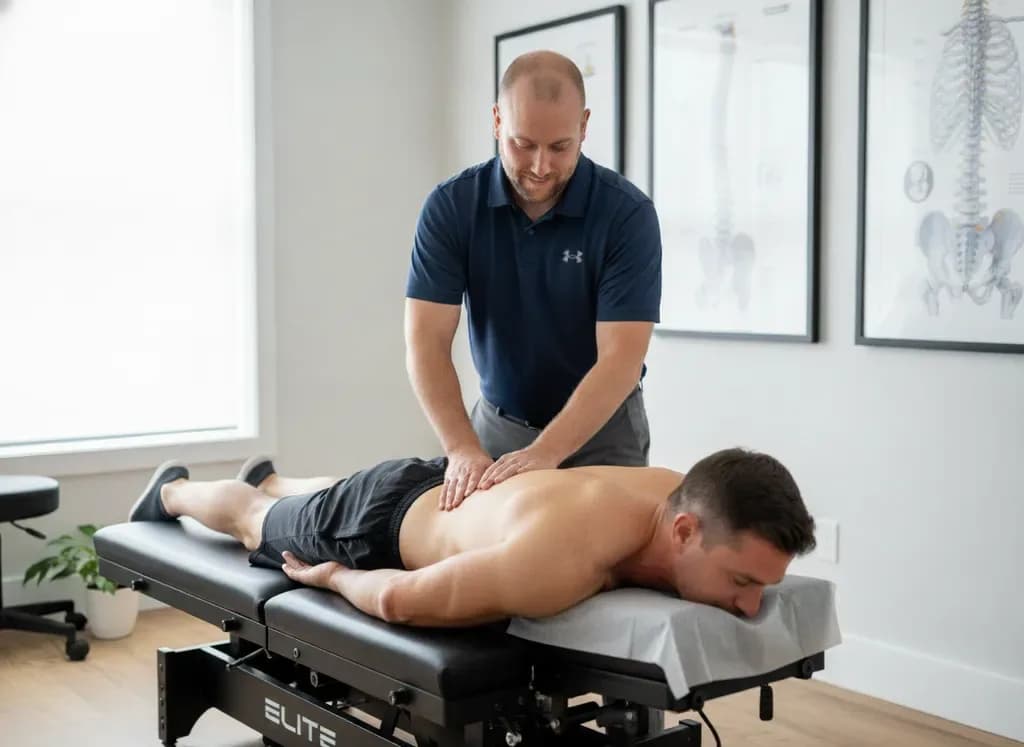
Hands-on chiropractic care for back, neck, and joint pain, adjustments, mobilizations, soft tissue work, and rehab exercises tailored to your assessment.
Learn more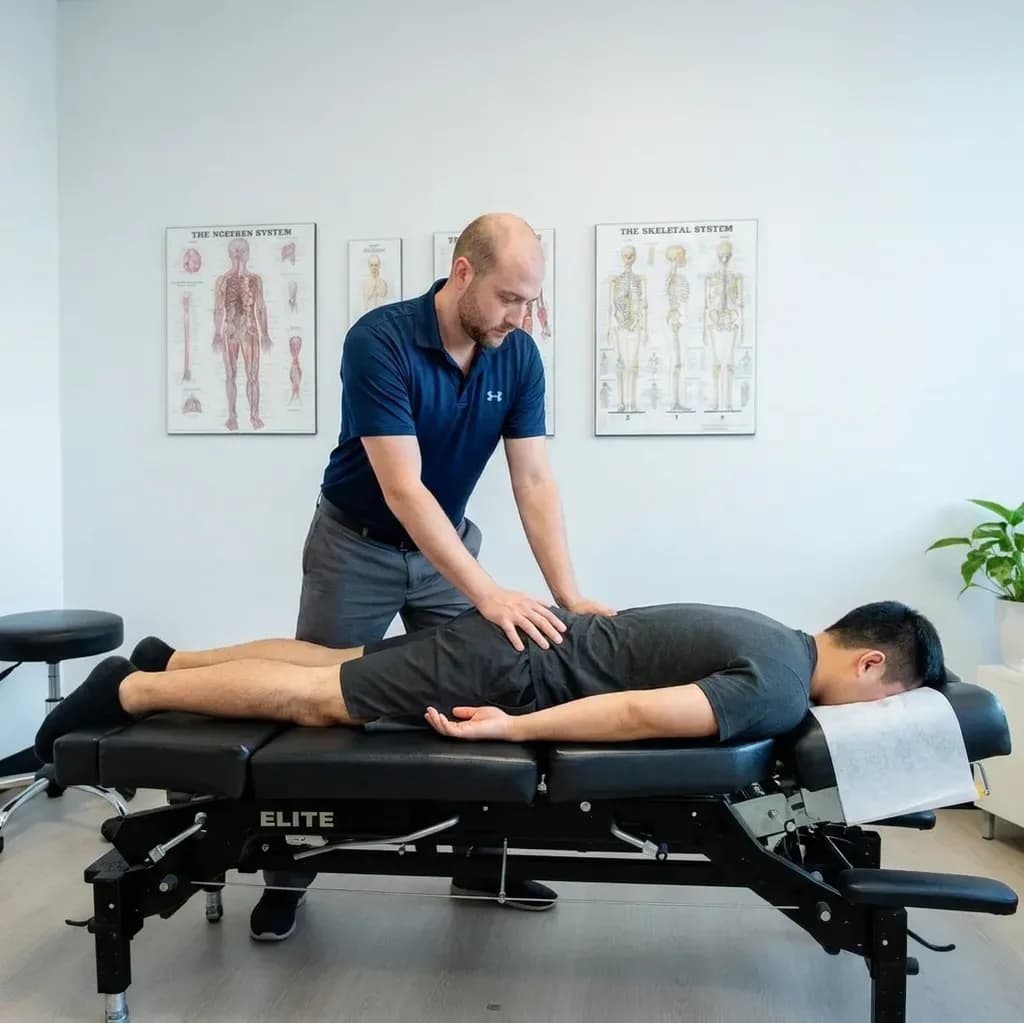
Expert assessment and care for complex spine cases, disc-related pain, sciatica, stenosis, and chronic low back pain that hasn't responded to standard treatment.
Learn more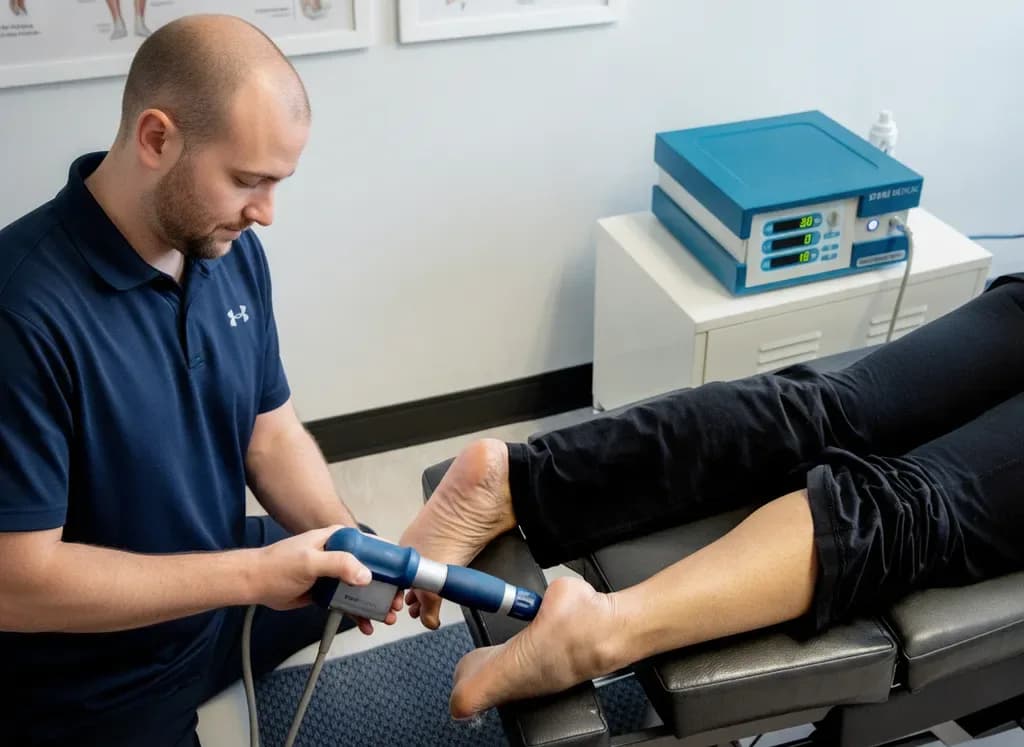
Extracorporeal shockwave therapy (ESWT) for chronic tendinopathy, plantar fasciitis, and calcific conditions that haven't responded to conservative care alone.
Learn moreOften shows up alongside what brought you here.
About si joint dysfunction
About the clinic
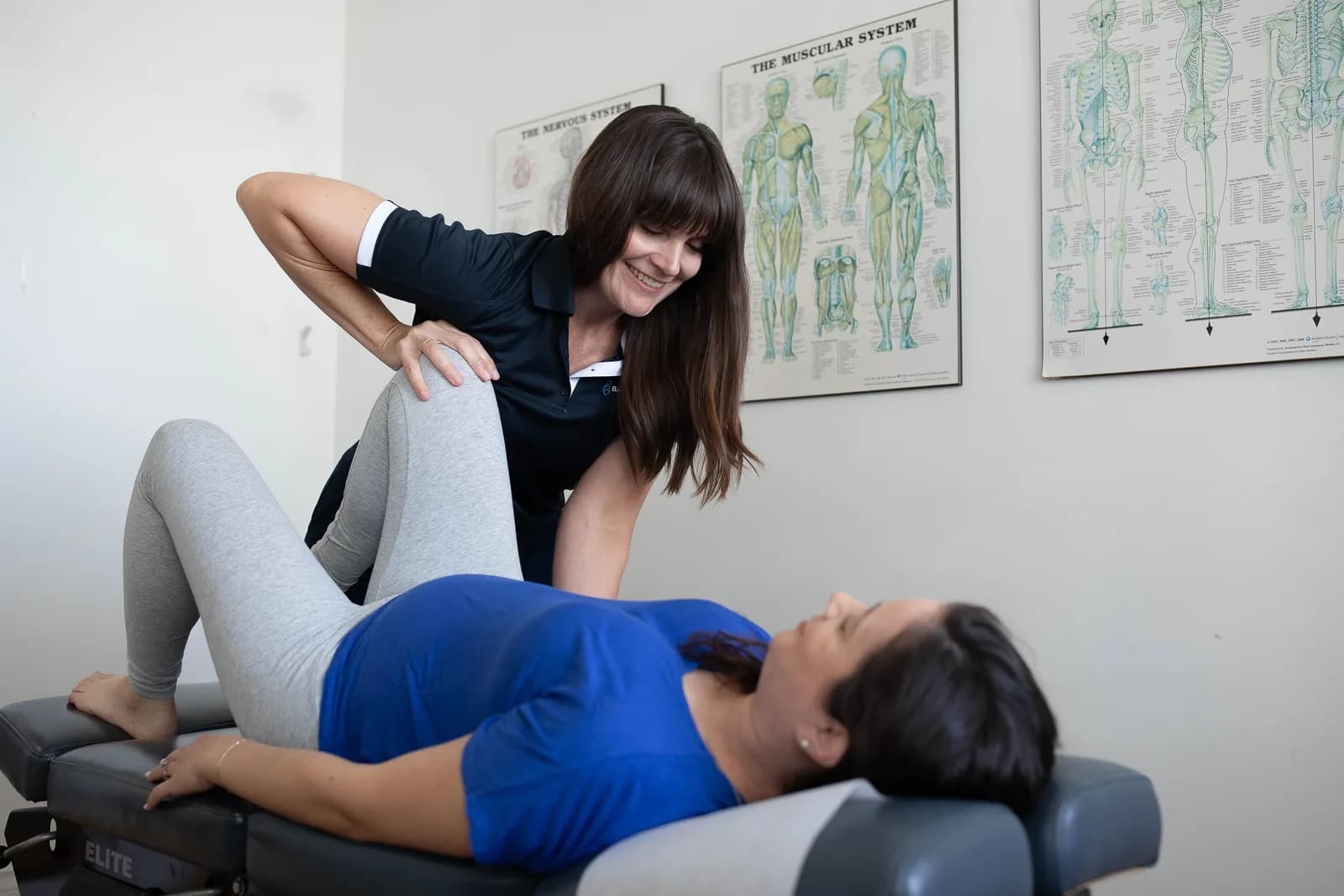
Learn about pelvic girdle pain during pregnancy, common symptoms, and how individualized chiropractic care can help.
Read the article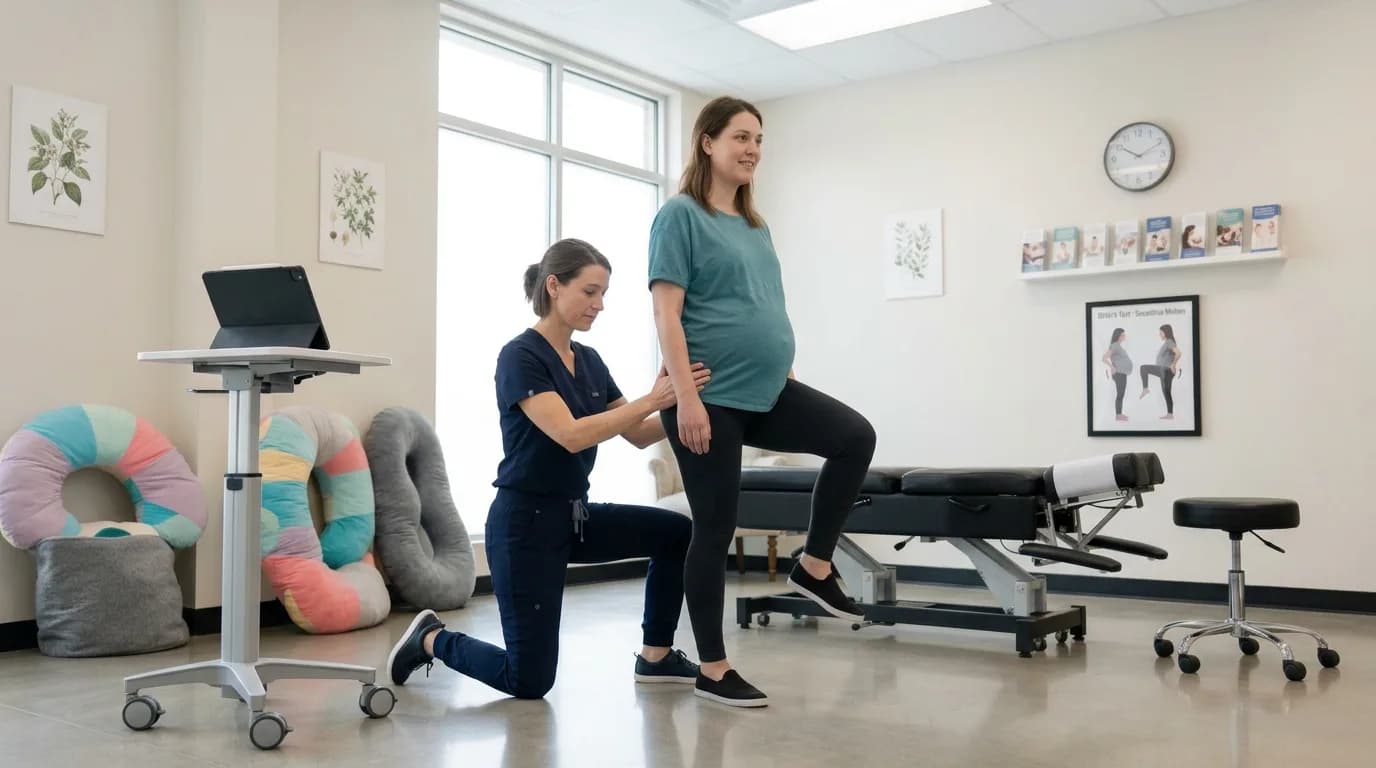
Chiropractic care during pregnancy can be a safe option, but it isn’t one-size-fits-all. Your care should be tailored to your symptoms, health history, stage of pregnancy, comfort, and goals.
Read the article
Reports show that more than two-thirds of pregnant women experience low-back pain and almost one-fifth experience pelvic pain. Back pain may be experienced
Read the articleTell us about your si joint dysfunction and the front desk will match you with the right practitioner.