
What is Plantar Fasciitis?
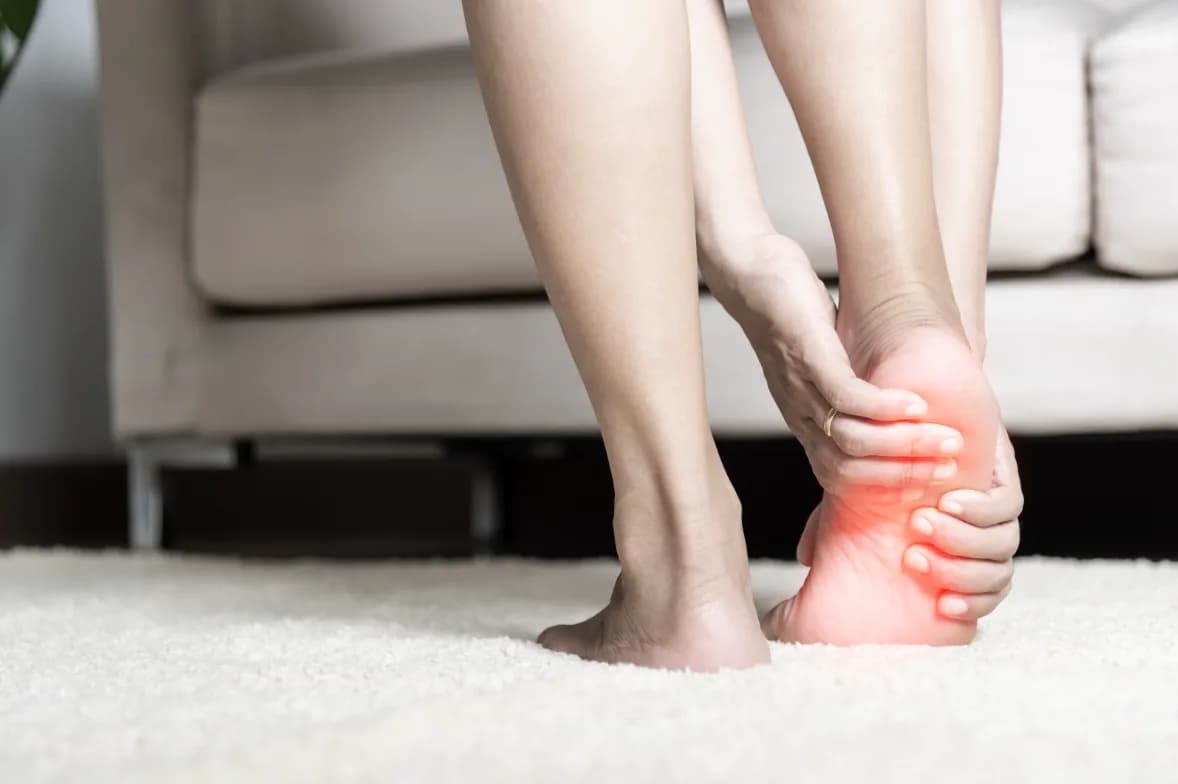
Plantar fasciitis is the cause of heel pain and one of the most common orthopedic complaints. It involves pain and inflammation of the plantar fascia, a thick band of tissue that runs across the bottom of your foot, from the heel to the base of your toes.
What are the symptoms?
Pain and stiffness at the bottom of the heel which may be dull or intense. In some cases the pain feels like a sharp stabbing pain or a burning sensation on the bottom of the foot extending outward from the heel.
What causes it?
There is no single cause and each person is examined case by case. If you are overweight more pressure is placed on your plantar fascia ligaments. If you are a runner or have recently increased your walking distance without investing in good shoes with proper arch support, you are more likely to develop plantar fascia problems. Tight calve muscles can also contribute to plantar fasciitis. No matter what the cause, you are more susceptible to developing chronic heel pain if you ignore the condition and this can ultimately change the way you walk and cause injury to your legs, knees, hips and back.
What can I do?
The best way to manage your plantar fasciitis is to be mindful of your alignment and do “reset” exercises. According to Max Health Institute, here is a list of the 6 most commonly found movement dysfunctional patterns related to plantar fasciitis type pain as well as exercises to help reset your alignment to manage your pain as well as take preventative measures.
Get ready, reset and go:
1. Side Gliding in Standing
We often “favour” our non-injured side by shifting our weight to the opposite side to limit the discomfort felt from pain in the ankle, knee, hip or back. When this happens, the result is that the bulk of your body weight has now shifted onto your other leg which could trigger other injuries. One way to make sure you are standing in alignment is to check your side gliding in front of a mirror. Stand with your feet at approximately shoulder width apart and keep your pelvis straight by slightly tightening your glutes. Move your pelvis and body to the opposite direction while keeping your shoulder level on the same horizontal plane. Repeat this exercise about 6 times and hold for 6 seconds. Continue to check your alignment.
2. Ankle Dorsiflexion
Once you have made sure that you have even weight bearing, it’s time improve dorsiflexion (backward flexion or bending of the foot) with ankle mobility exercises. Lack of ankle dorsiflexion is a commonly found dysfunction on the affected side. Without enough ankle mobility while walking, your body initiates the movement from beneath your foot which stresses your plantar fascia. In order to make sure your dorsiflexion is sufficient, bring your toes against a wall and try touching your knees to the wall while still keeping your heel grounded to the floor. To increase difficulty if you are having troubles feeling the stretch, move your foot farther away from the wall. You should be even on both sides, with both sets of toes the distance of about the width of your hand. Repeat this exercise 6 times for 6 seconds on each side.
3. Tibial (Lower Leg) Internal Rotation
When your lower leg inward rotation is lacking, this usually means you also have limited dorsiflexion. Knee problems are often the result of those who tend to walk like a duck with their feet turned out at varying degrees. This is not the position our feet are designed to bear weight in and walking with your feet like a duck creates unnecessary stress on the joints. To do this exercise, sit down on a chair with your knees bent at a 90 degree angle and in line with your feet which should be pointing directly forward. Now without letting your knees move inwards, turn both your feet and lower legs towards each other. Maintain a 15 degree rotation with both your feet flat on the ground. Repeat about 6 times for 6 seconds or as much as you can tolerate.
4. Great Toe Extension
Without ample big toe extension, your body will initiate the movement from your plantar arch and put strain on your plantar fascia. From a kneeling position with your knee at 90 degrees, pull back on your big toe. You want at least 45 degrees of big toe extension in this position. If you are sitting down with your leg up, then 80 to 90 degrees is ideal. You can also kneel on both knees with your toes tucked under yourself for a maximum stretch. Again, repeat this exercise at least 6 times on both feet holding each position for 6 seconds.
5. Calcaneus (Heel) Eversion (Bending Toward Outside)
The calcaneus is often overlooked and has far reaching effects when it comes to foot and ankle mobility, injury prevention and pain management. If your heel isn’t able to bend properly when you are walking, you risk overstraining other parts underneath your foot. Your subtalar joint, which is located between the heel and ankle, plays a huge functional role in adapting to uneven ground like a rocky terrain or sandy beach. In order to check your subtalar eversion, try this exercise. In a sitting positon, cross your leg over your thigh and manually bend your heel down and out while cupping it in your hand. If there is not movement, this is problematic. Otherwise 15 degrees of movement is normal. Repeat on and off on both feet for 1-2 minutes and repeat 6 times daily.
6. Single Leg Balance with Foot Straight
You could be experiencing your plantar fasciitis pain due to balance issues. The best way to test and improve your balance is by standing on one leg. Begin with both legs grounded on the floor and then lift one leg with your hip at 90 degrees and leave your arms handing by your side. Now to add a little difficulty, close your eyes and hold the position for 10 seconds. Balancing can be made a regular practice by throwing it into your daily routine. Try cleaning the dishes while balancing, but don’t drop a plate in the process!
Other Tips
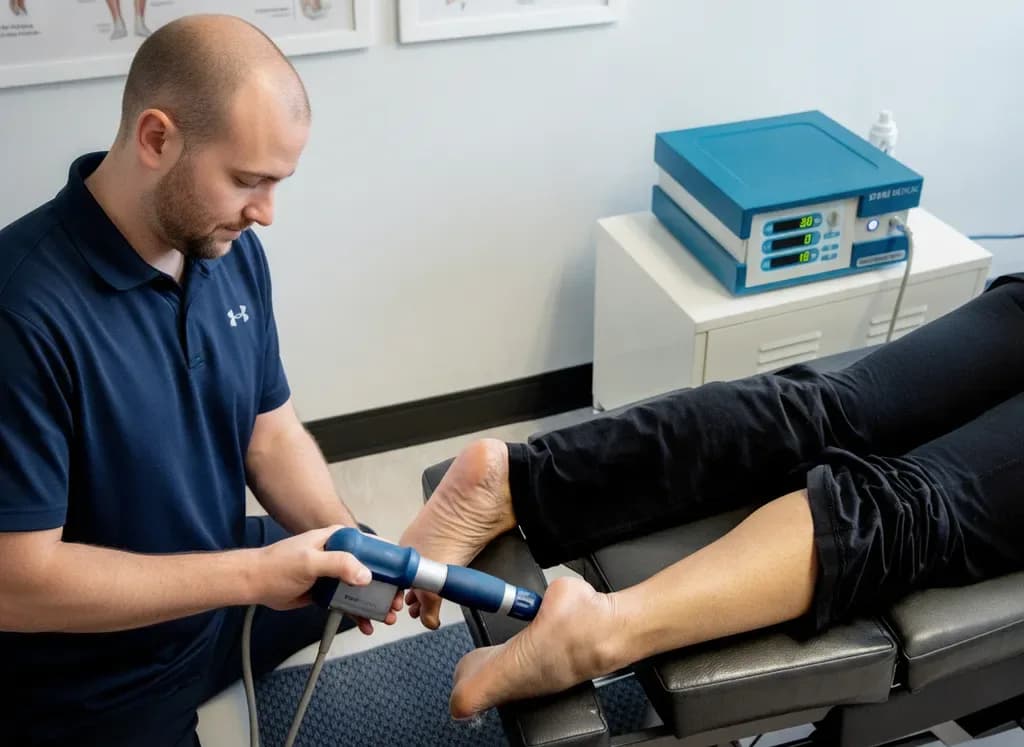
- Shockwave therapy: Helps restore thickened tissues back to a healthy condition.
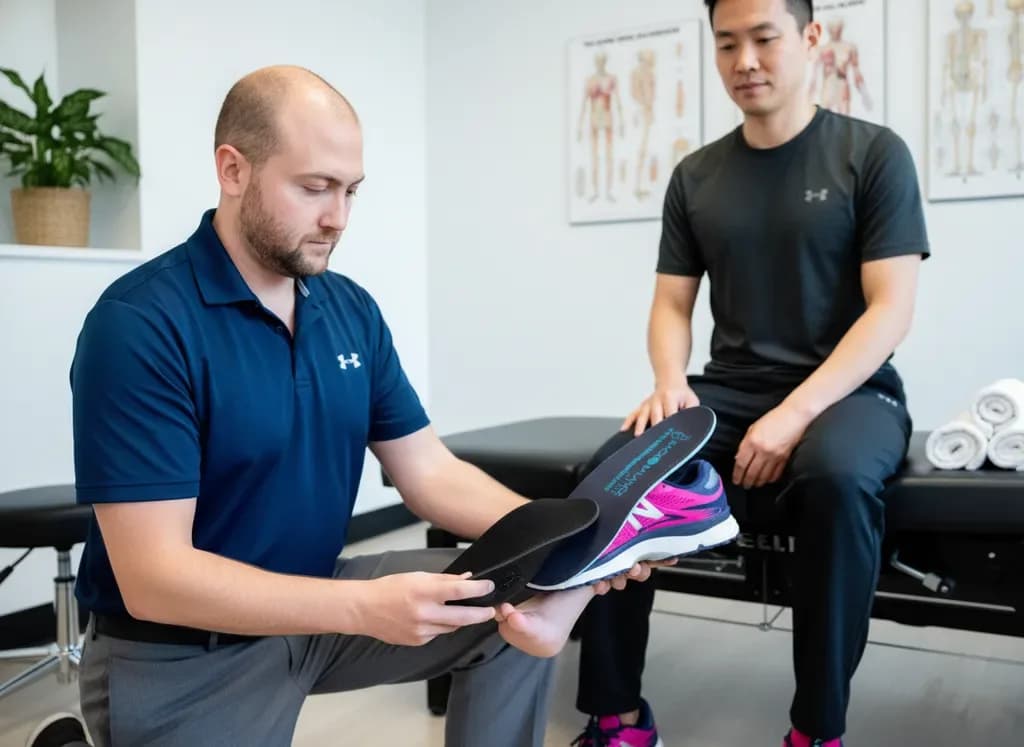
- Arch support orthotics: These insoles will provide arch support for any shoe and activity. They provide relief to the muscles and other areas beneath your feet.
- Injury prevention: Keep your weight at a healthy number to avoid adding excess strain to your plantar fascia. It’s also advisable to create a foot muscle conditioning routine. Make sure you have ample amount of rest time between training sessions.
When will I see results?
Each person is different. Simply doing these reset exercises might be all you need to address the pain. It really depends on how long you have been experiencing the condition, which affects how long it takes you to regain your movement. Usually the longer you’ve had plantar fasciitis, the longer it takes the tissue to remodel. The above exercises can be used in conjunction with one another. If pain or discomfort persists 15 minutes after you do the exercise, stop doing the exercise or lessen the amount of repetitions.
Haven’t seen our chiropractors in a while? Call us today to book your re-evaluation or book online!
Sources: http://www.maxhealthinstitute.ca/blog/2015/3/17/smyp01w1nr352zdgev9zio0djum447
Related reading: Why See a Toronto Chiropractor When You Have Post-Holiday Aches.