Disc bulge
The disc wall pushes outward without the inner gel breaking through. Often a normal age-related finding that may not be causing pain at all, and usually settles with graded movement and load management.

Disc bulges, herniations, and disc-related sciatica. What the imaging actually means, when surgery is and isn't on the table, and the conservative pathway most patients respond to.
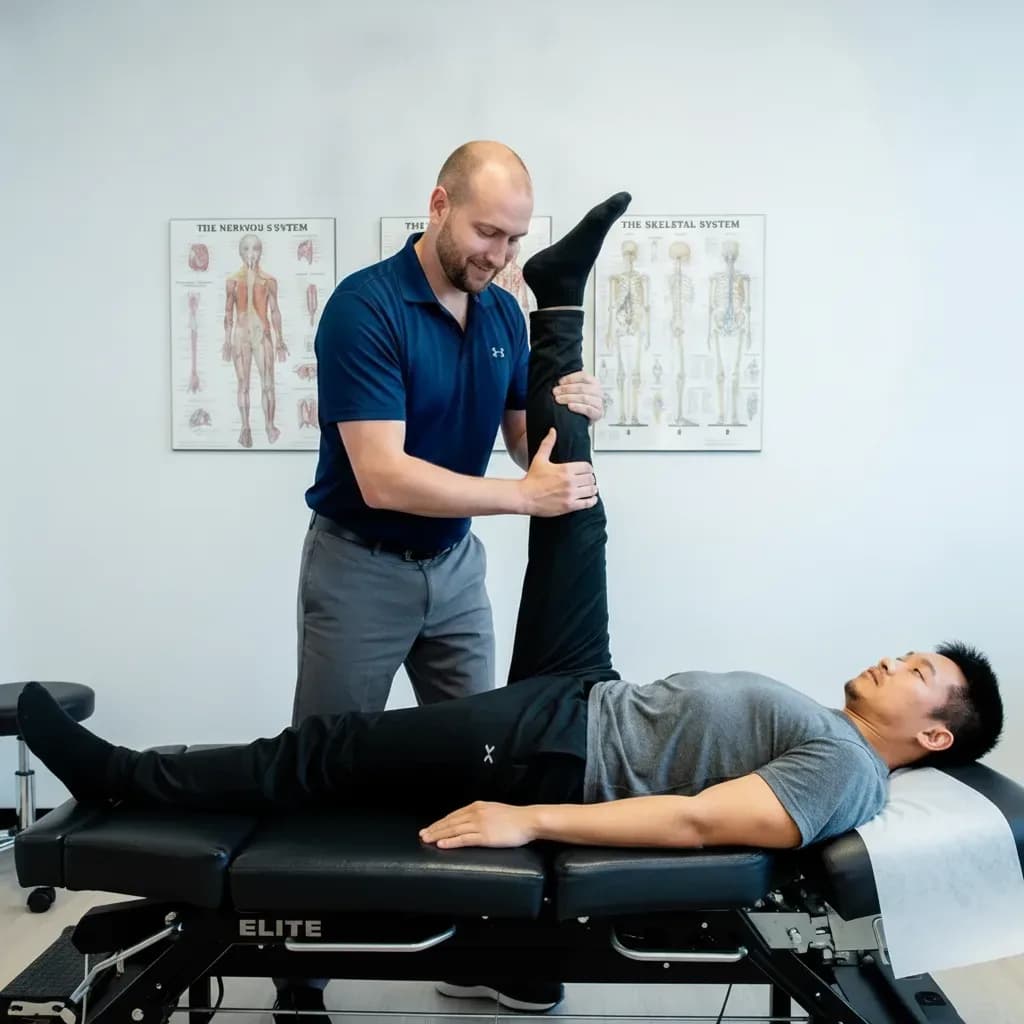
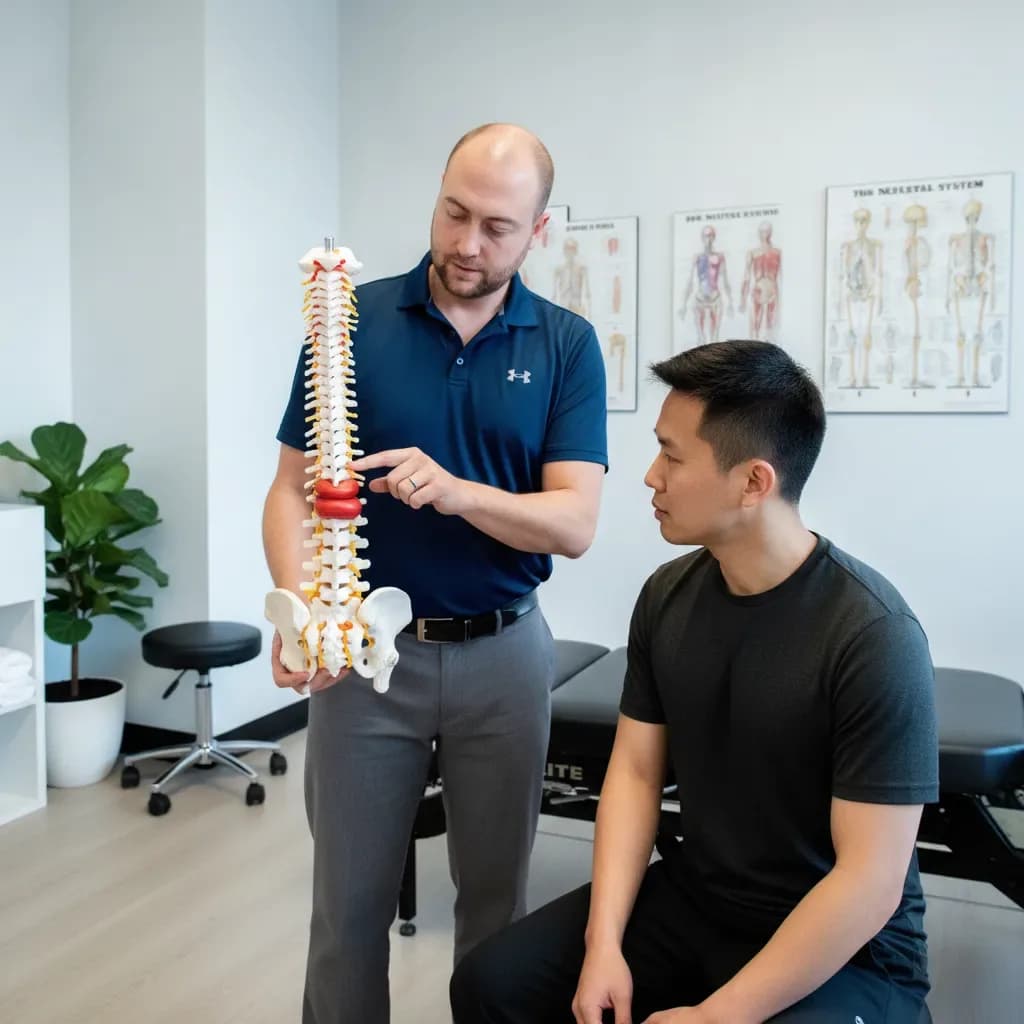
Discs are the spongy cushions between the vertebrae. They can bulge or herniate, meaning the soft inner gel pushes against or through the tougher outer wall, and that can irritate a nearby nerve root, producing pain, numbness, tingling, or weakness that radiates into a leg (or, less commonly, an arm). It's one of the most common drivers of sciatica we see at our downtown Toronto clinic.
Here's the part that surprises most people: disc bulges and herniations show up on MRI in roughly 30–40% of completely pain-free adults, and the number climbs steadily with age. They're often a normal feature of a living, working spine, not the cause of your symptoms. Treating someone on the basis of an image alone, without matching it to the clinical picture, is a recipe for unnecessary fear, unnecessary imaging, and unnecessary surgery. Our job is to connect what your body is doing to what the assessment actually shows.
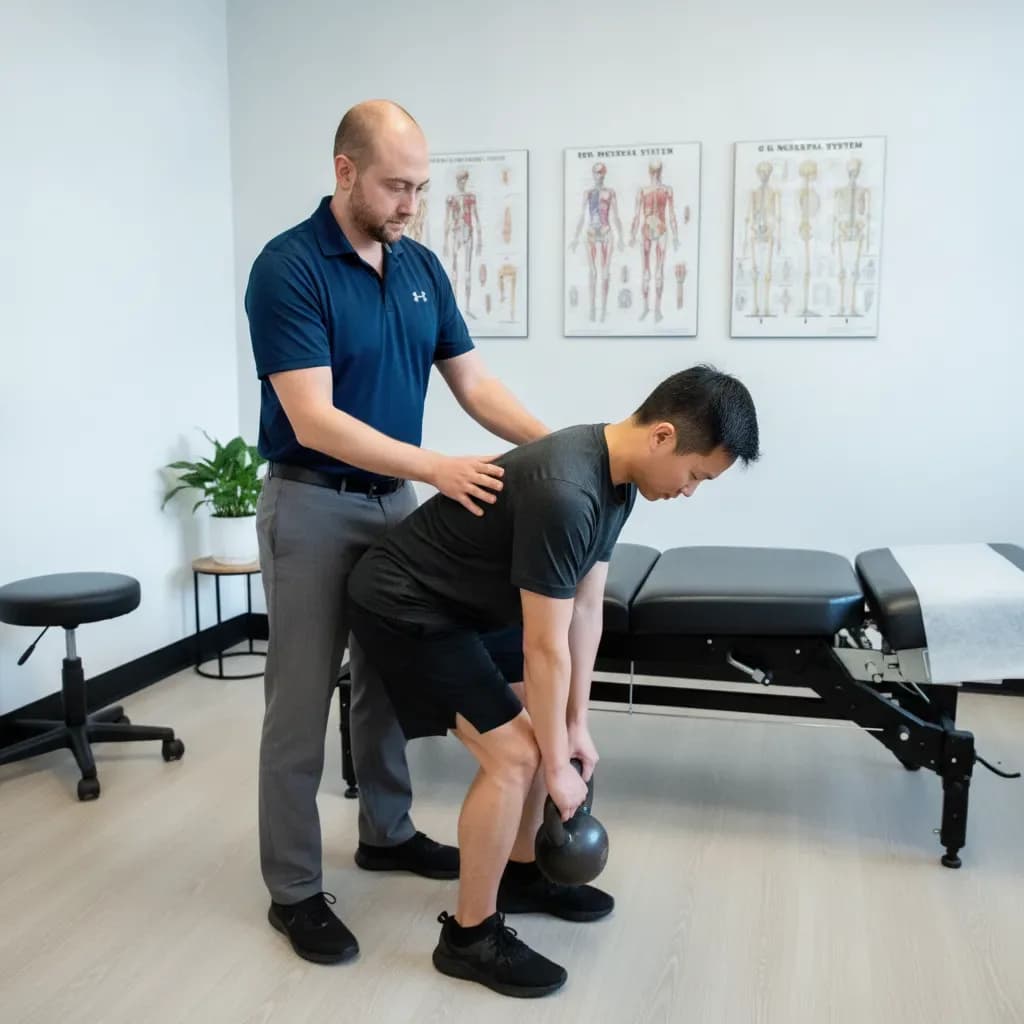
The phrase 'slipped disc' is one of the most unhelpful in all of back care. Discs are firmly anchored between the vertebrae; they don't slip in and out of place. What actually happens is a gradual process: the disc's outer fibres weaken with age and repeated load, and under the right mechanical stress the soft inner core pushes outward, sometimes far enough to contact a nerve root.
Most people can't point to a single dramatic moment. More often it's the slow accumulation the spine wasn't built for: years of prolonged sitting, repeated bending and lifting under load, a sudden return to heavy activity after a sedentary stretch, or normal age-related disc degeneration (DDD/DJD) that lowers the disc's tolerance over time. Genetics and smoking play a role too. The good news is that the same disc that became irritated can also adapt and tolerate load again, when it's reloaded at the right pace.
The disc wall pushes outward without the inner gel breaking through. Often a normal age-related finding that may not be causing pain at all, and usually settles with graded movement and load management.
The inner core breaks through the wall and contacts a nerve root, producing sharp, radiating leg pain in a clear nerve pattern. Most respond well to position-of-relief work and graded loading without surgery.
Lower back pain guideAge-related thinning and stiffening of the disc, common, and not the same as 'damage.' Care focuses on keeping the segment moving, building support, and confidence, not chasing the imaging.
Advanced spine careIf any of the following are present, contact your family doctor or visit the emergency department before booking with us. These can indicate cauda equina syndrome or a progressing nerve compression, both need imaging and surgical evaluation quickly, not conservative care.
These emergencies are rare, most disc-related pain is safe to treat conservatively. Book an assessment: we're trained to look for the serious causes, and if anything points to one, we'll get you to the right care fast.
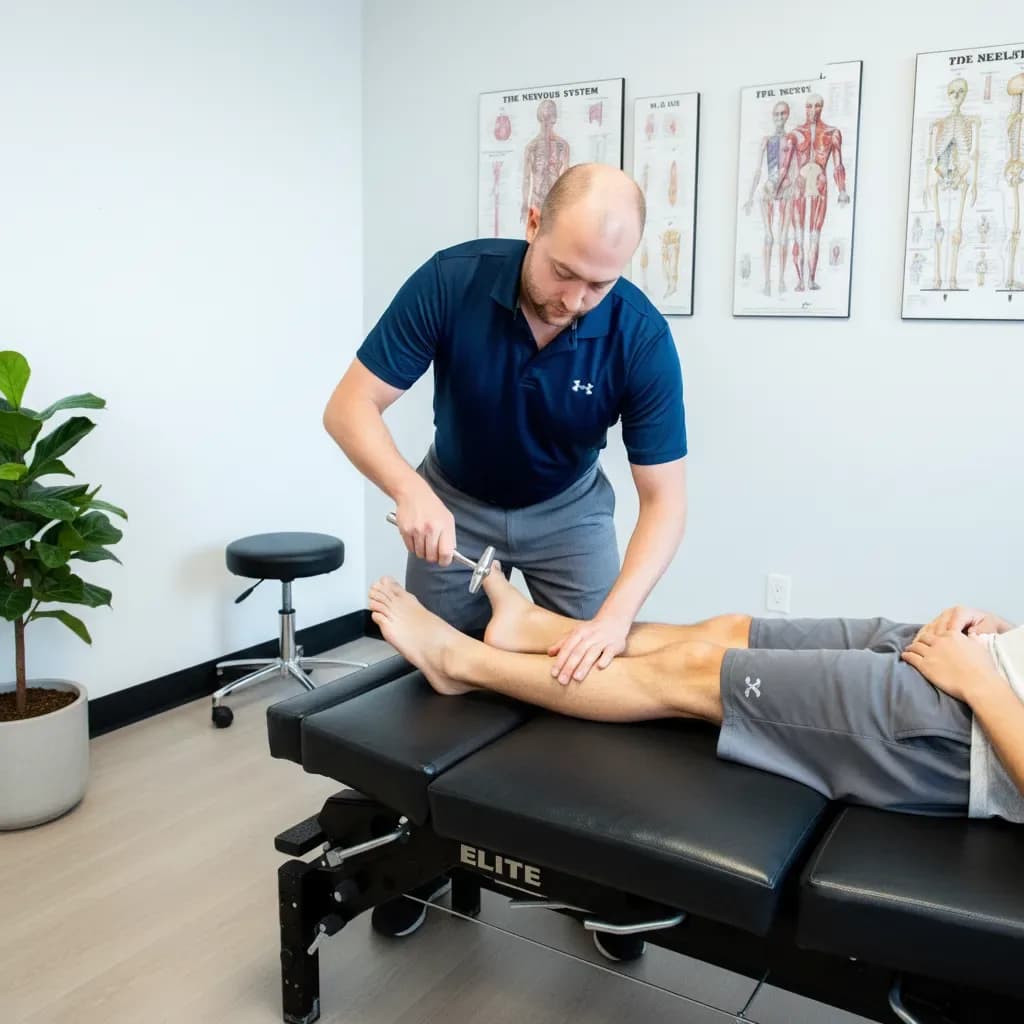
Your first visit takes 45–60 minutes and starts with a detailed history: where the pain travels, what makes it better or worse, whether there's numbness, tingling, or weakness, and how it's affecting your day. From there we run an orthopedic and neurological assessment, reflexes, muscle strength, sensation, and movement testing, to map whether a specific nerve root is involved and which direction of movement calms it down.
That clinical map is what tells us whether you're dealing with a genuine disc-related problem, a different pain source that's been mislabelled, or a red flag that needs medical attention. Dr. Matthew Serrick holds Advanced Practice Provider training in structured spine triage, the same standard that decides when imaging or a surgical opinion is genuinely warranted, applied right here in the clinic. You'll leave with a plain-language explanation and a clear plan.
Gentle joint mobilization, soft-tissue work, and direction-specific positions of relief that calm the irritated nerve. Technique is matched to your tolerance, never aggressive thrusts on inflamed tissue.
Chiropractic careTargeted nerve-glide work where indicated, then a progressive loading plan so the disc relearns to tolerate movement. Five to ten minutes a day, a clear progression, not a gym program.
Where it speeds recovery, we add shockwave and laser/LLLT to reduce pain and support tissue healing alongside the active plan.
Shockwave therapy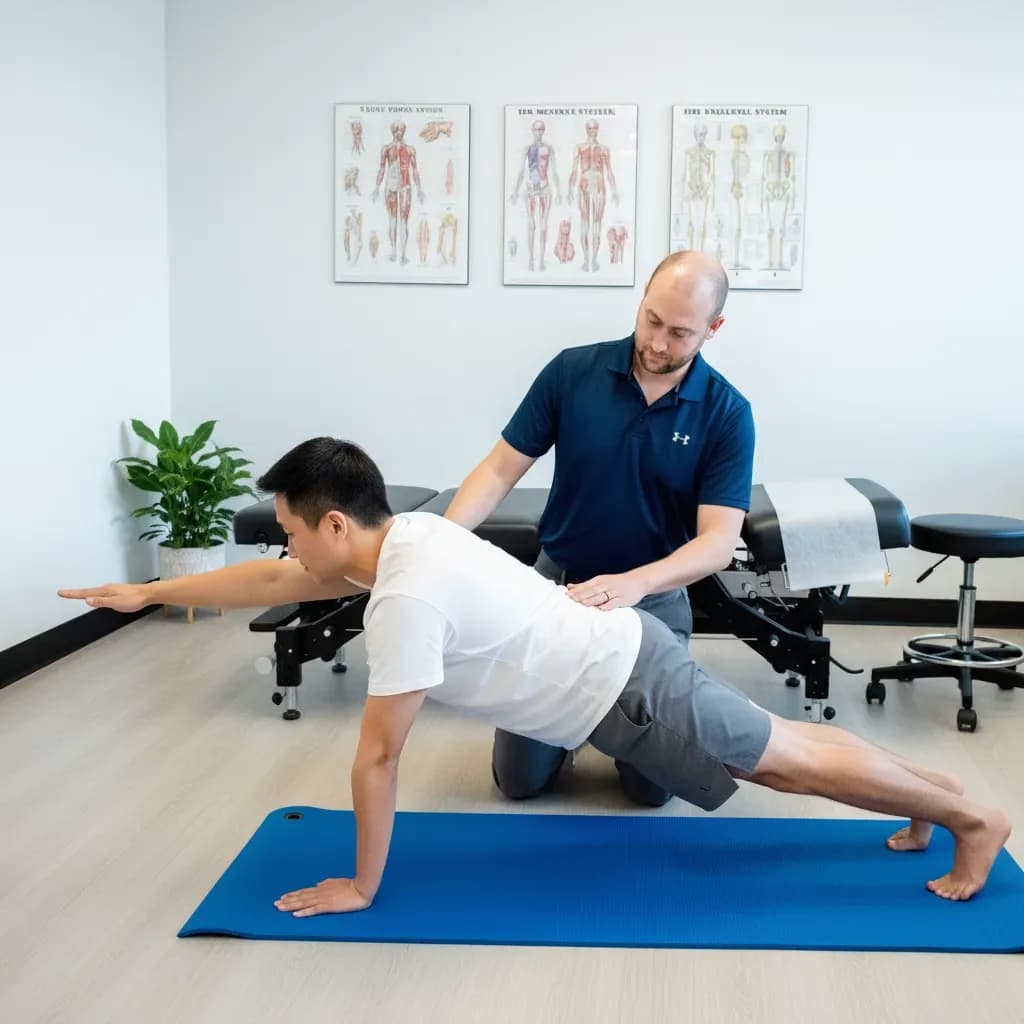
This is the message most disc patients never hear clearly: the body reabsorbs herniated disc material over time, and larger herniations often shrink more than small ones. Studies following patients with disc-related sciatica show that roughly 90% improve substantially within 12 weeks of structured conservative care, and fewer than 1 in 20 ultimately need surgery. The disc is far more capable of healing than the scary version of the story suggests.
Recovery isn't just about waiting, though. It's about staying gently active, avoiding the bed-rest trap, gradually rebuilding load tolerance, and re-learning that movement is safe. We treat the tissue, but we also take time to debunk the catastrophic stories patients arrive with, because fear and avoidance slow recovery as much as the disc itself. The goal isn't only to settle this episode, it's to leave you confident and resilient enough to lift, run, and live without bracing for the next one.
~90%
Improve within 12 weeks
APP-trained
Advanced spine triage
Pittsburgh
Primary Spine Practitioner
Direct bill
Most Ontario insurers
A few words from patients we've helped recover from herniated and bulging discs without surgery.
“Dr. Serrick took the time to explain my disc injury in plain language and never rushed me. The progressive approach worked, no injections, no surgery, and I'm finally pain-free.”
“The shooting pain into my leg had me afraid to move. They eased me back into activity step by step, and within a few weeks I was lifting again, carefully, but lifting. So glad I came here first.”
“I was convinced a disc problem meant surgery was coming. Instead I got a clear explanation of what was actually happening and a plan I could follow. The sciatica down my leg has settled and I'm back to my old self.”
The broader picture on mechanical low back pain, sciatica, and what actually drives recurring episodes.
Lower back painLeg heaviness or cramping that builds with walking and eases when you sit or lean forward, often confused with disc pain.
Spinal stenosisOne-sided pain at the dimple of the lower back that can mimic disc-related symptoms but needs a different plan.
SI joint dysfunctionWhat we'll typically pull from when we put a plan together.
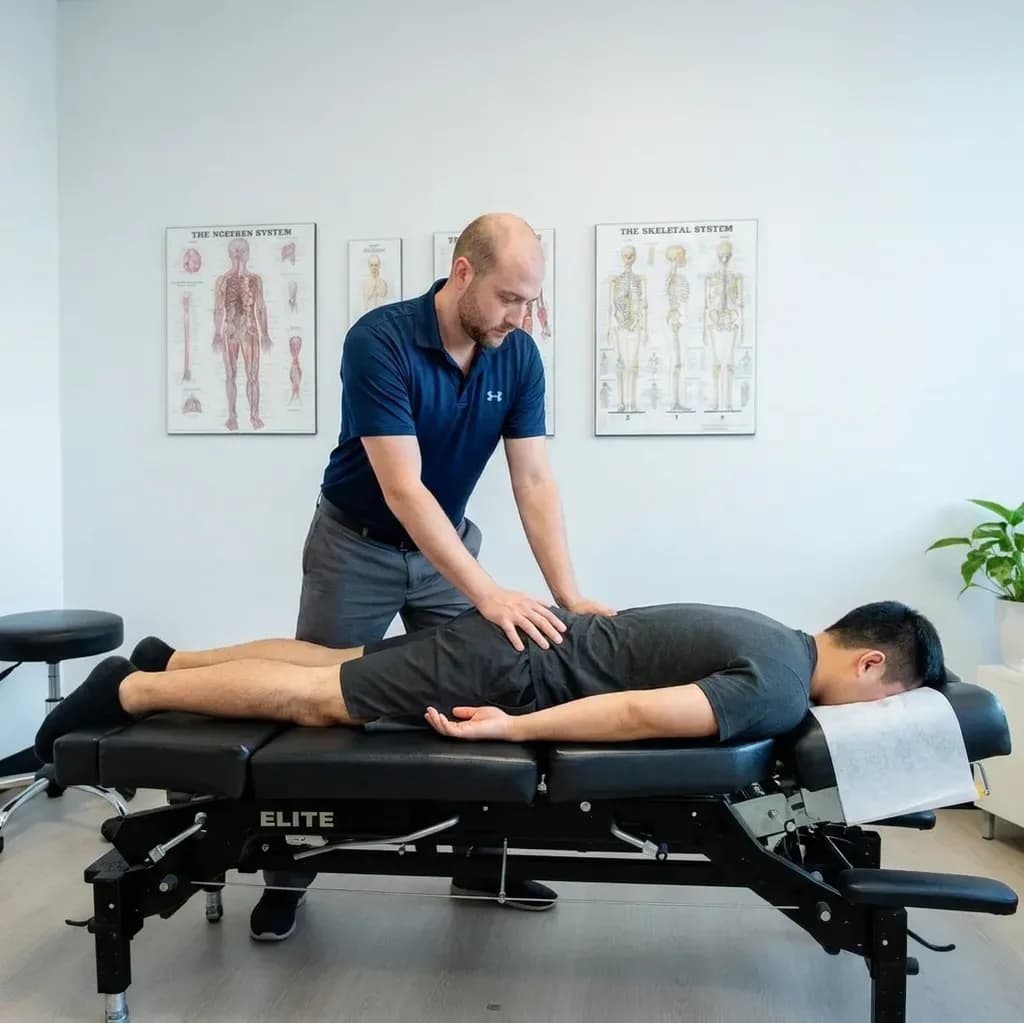
Expert assessment and care for complex spine cases, disc-related pain, sciatica, stenosis, and chronic low back pain that hasn't responded to standard treatment.
Learn more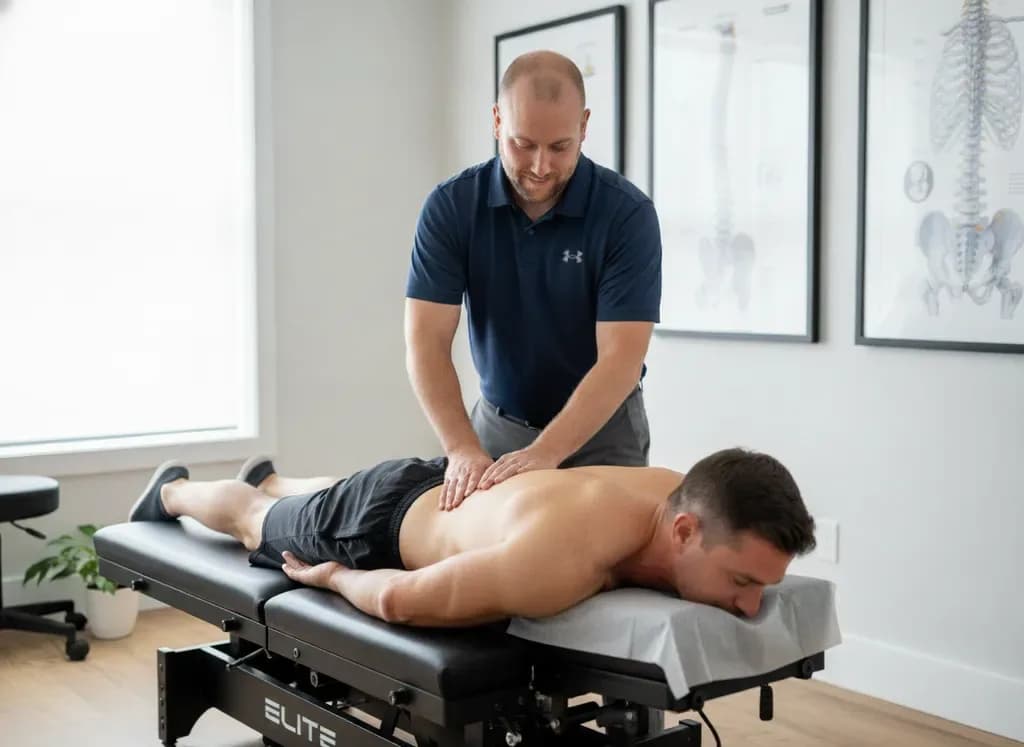
Hands-on chiropractic care for back, neck, and joint pain, adjustments, mobilizations, soft tissue work, and rehab exercises tailored to your assessment.
Learn more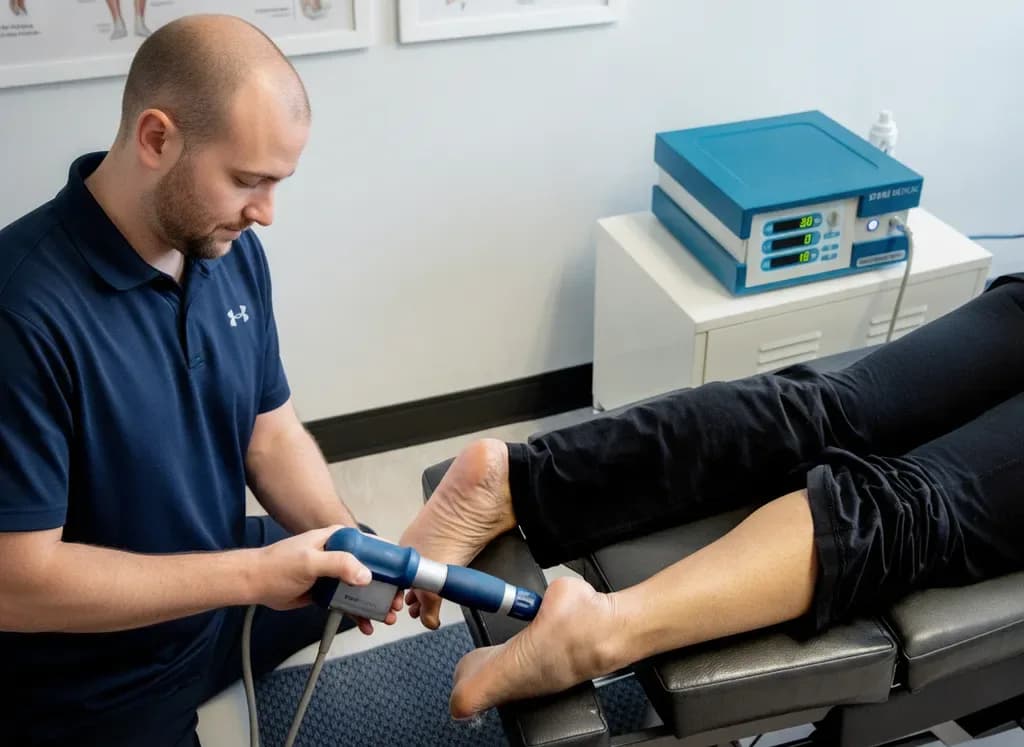
Extracorporeal shockwave therapy (ESWT) for chronic tendinopathy, plantar fasciitis, and calcific conditions that haven't responded to conservative care alone.
Learn moreOften shows up alongside what brought you here.
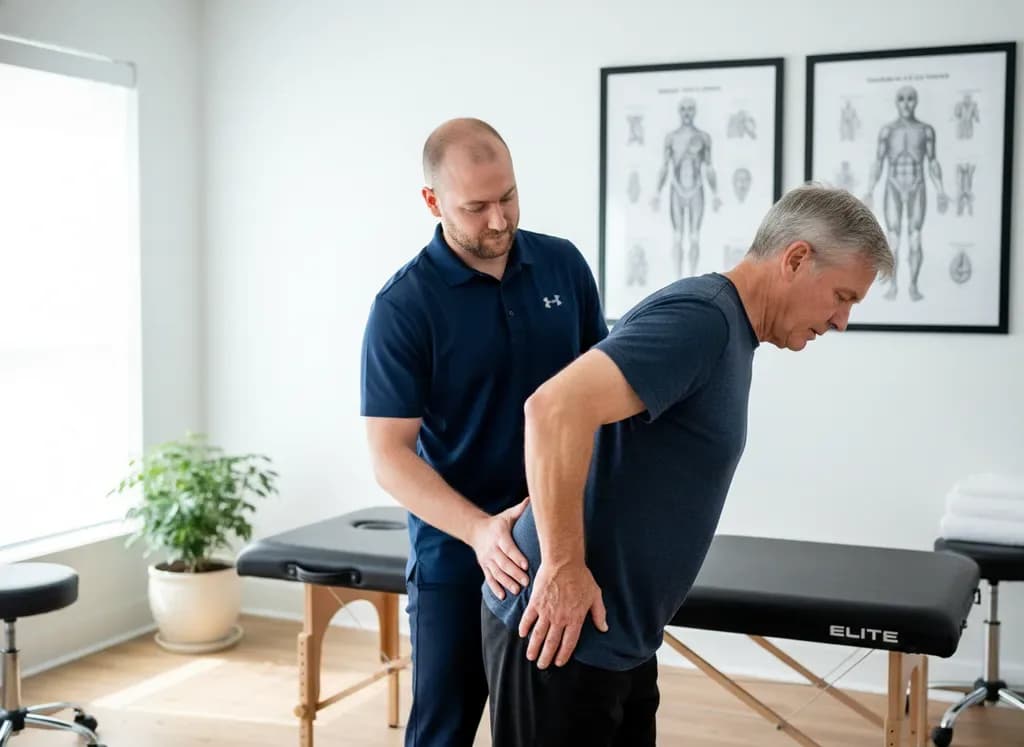
Conservative care for narrowing of the spinal canal, neurogenic claudication, leg cramping with walking, and pain that eases when you sit or lean forward. Advanced spine triage included.
Read the guide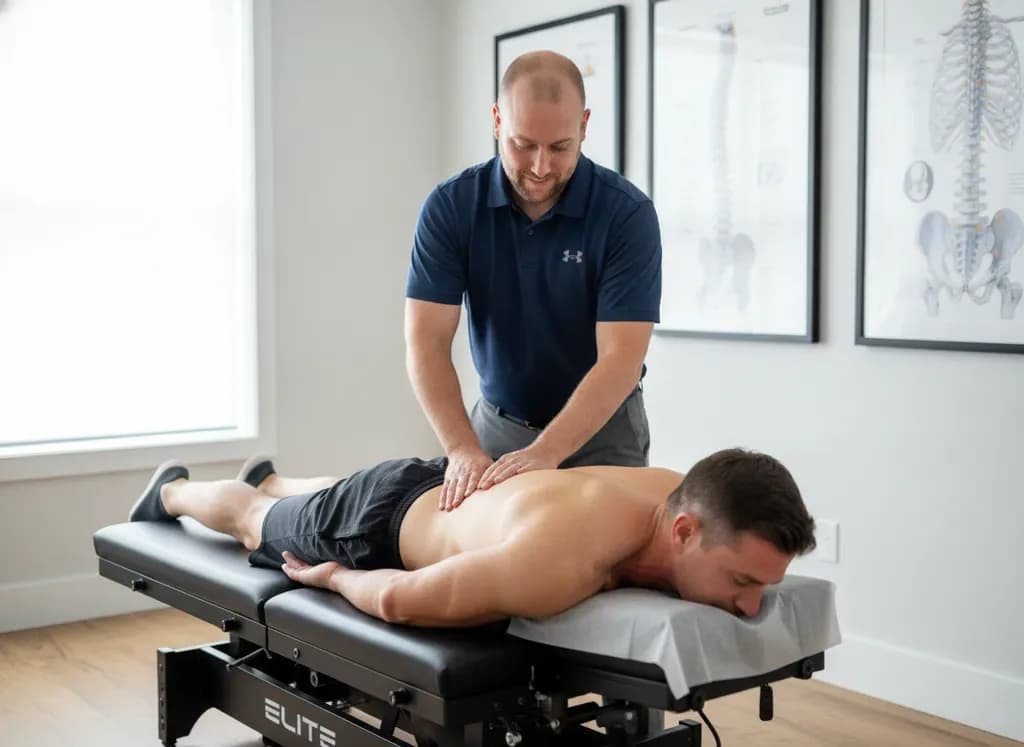
Lower back pain is the most common reason patients book at BACK IN BALANCE, from acute flare-ups and sciatica to chronic pain that limits daily life. Same-day chiropractic assessments for lower back pain at our downtown Toronto clinic.
Read the guide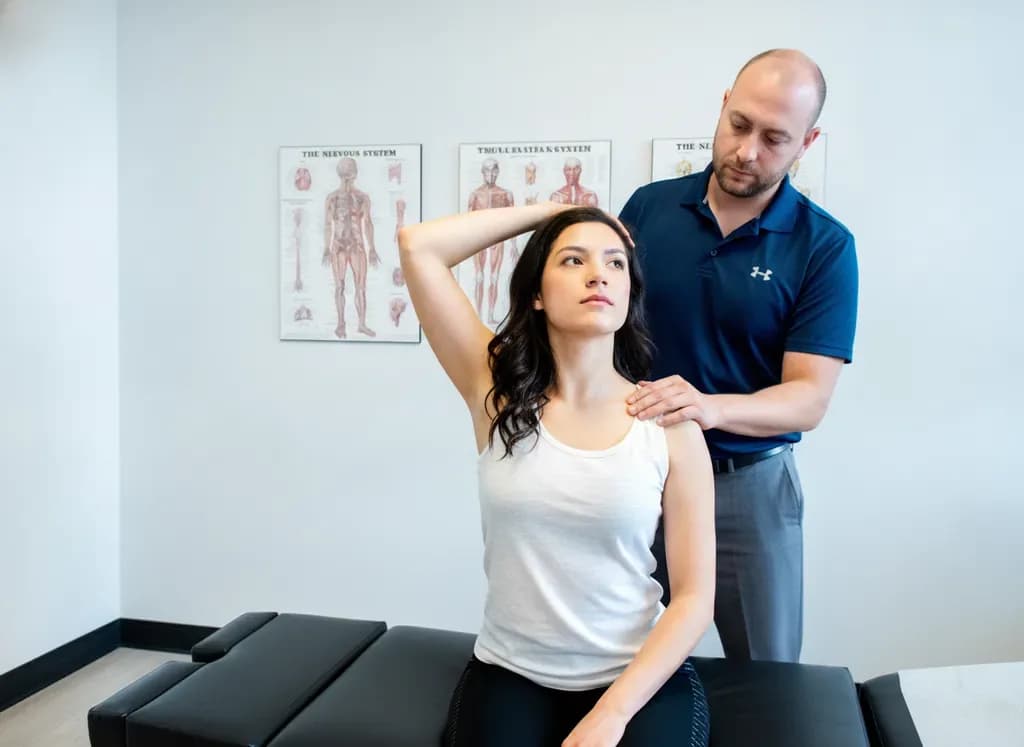
Tech neck, postural neck pain, cervicogenic headaches, post-whiplash recovery, and pinched-nerve symptoms, assessed and treated with the same expert rigour we bring to low back pain.
Read the guideAbout disc injuries
About the clinic
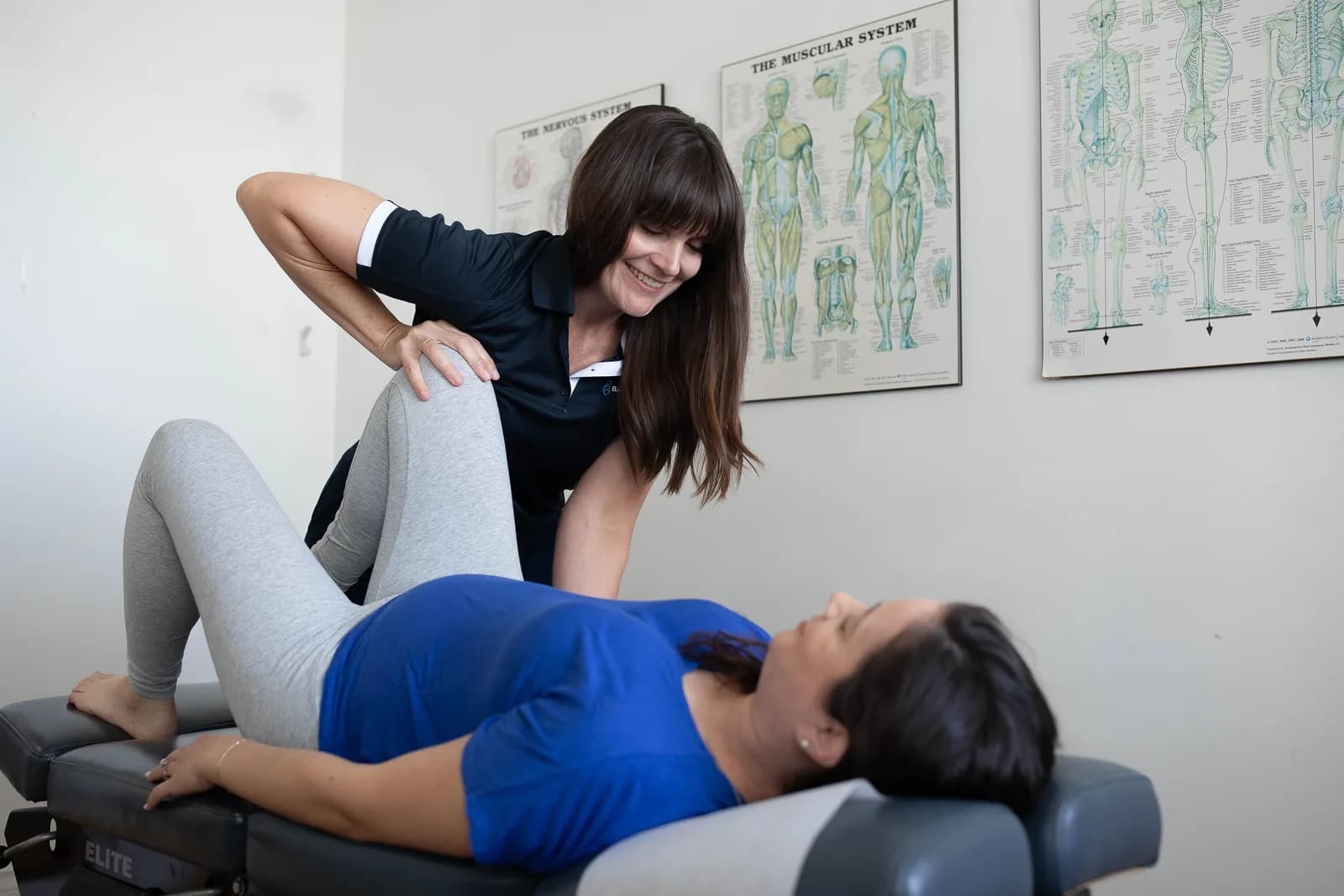
Learn about pelvic girdle pain during pregnancy, common symptoms, and how individualized chiropractic care can help.
Read the article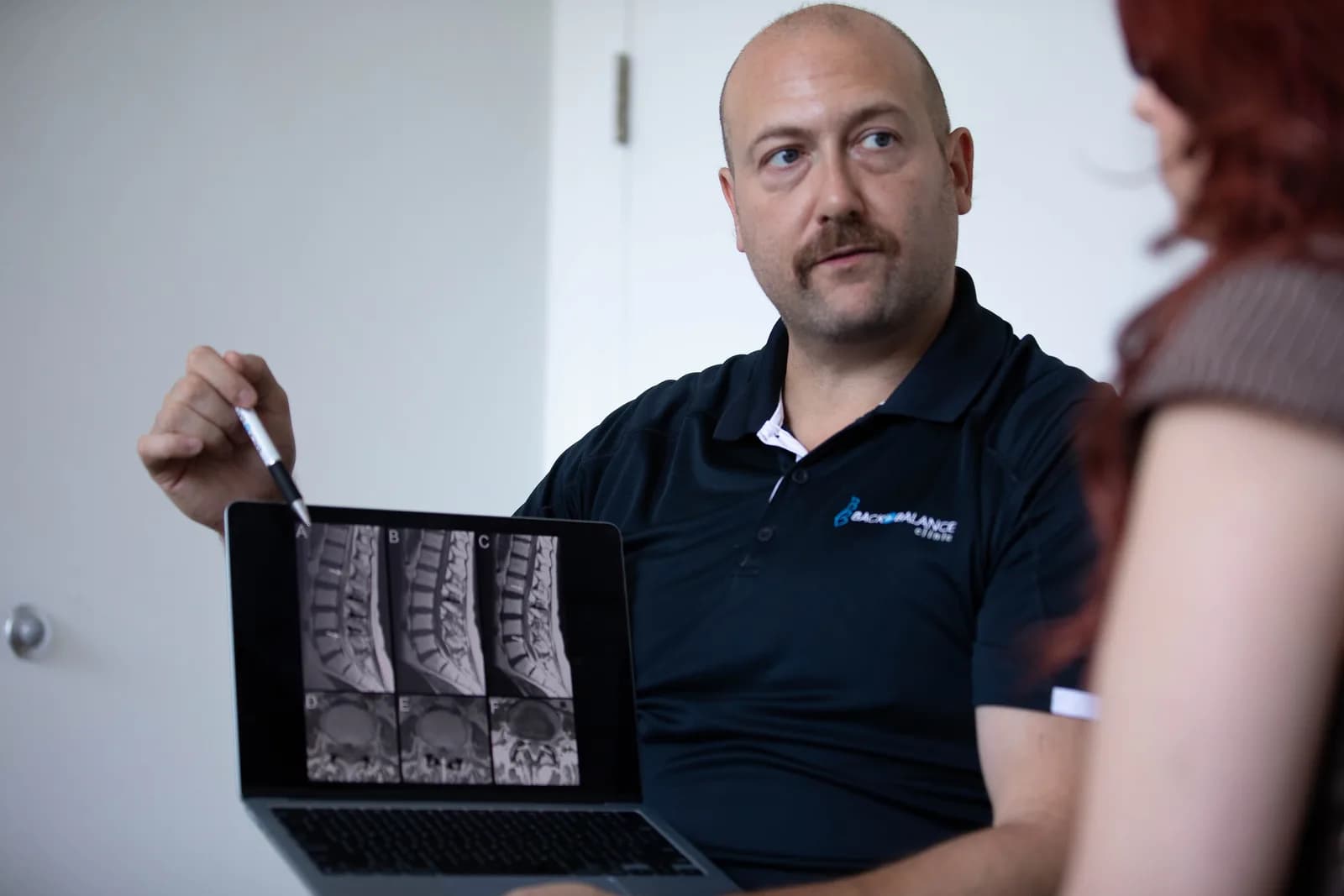
An MRI can be essential when low back pain suggests a serious problem or when the results will guide specialist treatment. For many people, however, a scan adds information without improving care. Here is how to tell the difference, and why the way MRI findings are explained matters.
Read the article
An injury flare-up does not always mean new damage. Learn how balancing capacity and demand can settle symptoms while helping you rebuild the strength and tolerance needed for daily life.
Read the articleTell us about your disc injuries and the front desk will match you with the right practitioner.