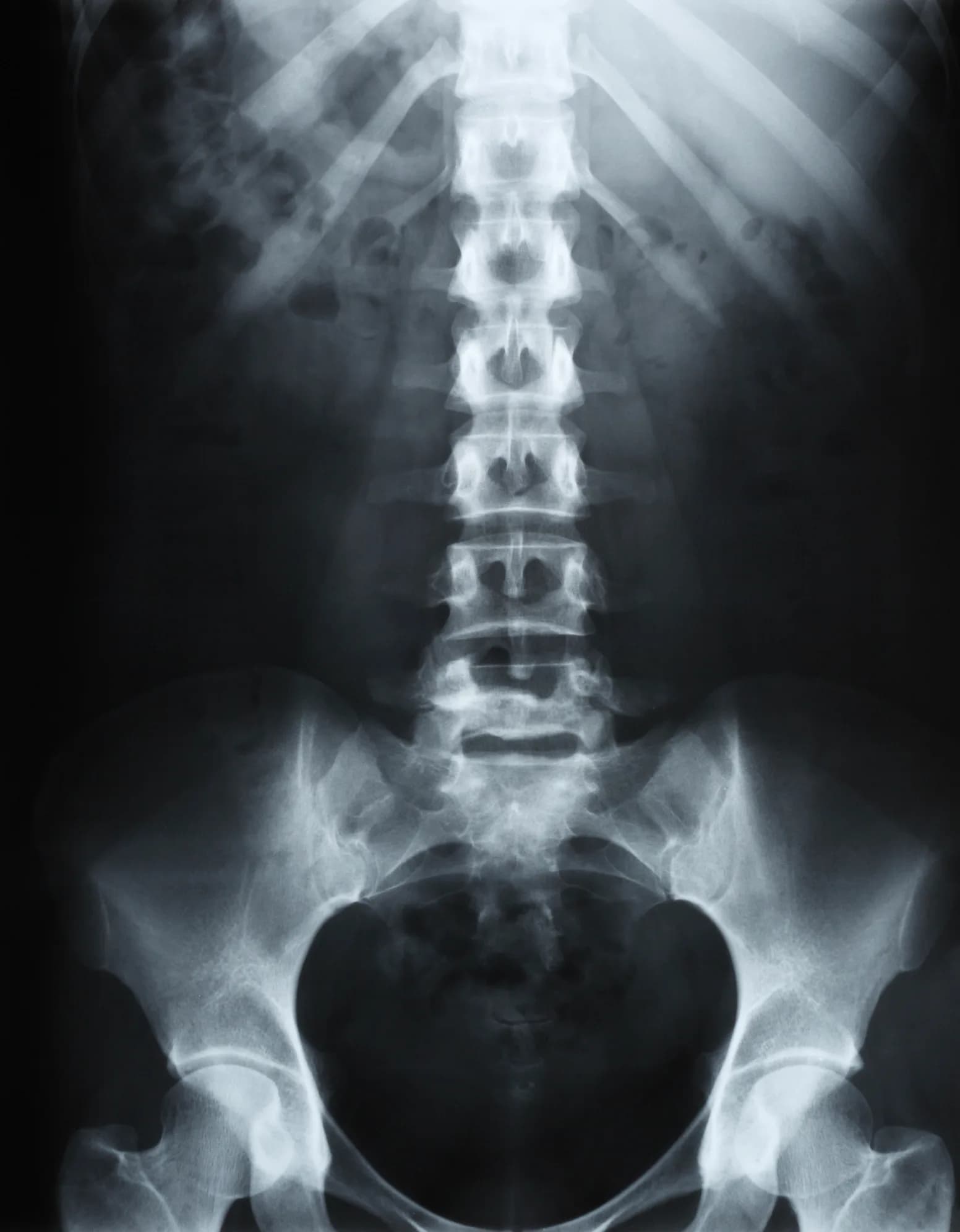

80% of people experience some form of general back pain at some point in their life, with 90% of that pain being specifically low back pain. The most common form of back pain is designated nonspecific or mechanical because it lacks a specific pathology that has caused the pain. The good news is that nonspecific back pain cases are typically self-limiting, resolving in 4-6 weeks. Although low back pain is common, it can greatly affect our day to day life preventing us from playing sports, doing regular work, affecting our sleep or preventing us from going on regular walks. When people go to their doctor for low back pain, they have many questions with one of the more common ones being, “do I need an x-ray or MRI?” A valid question that we will answer below.
Shoulder I get Imaging?
In 2011, Chou et al published a summary on the evidence for routine imaging of low back pain. They found that the American College of Physicians Low Back Pain Guideline recommends selective imaging for patients in whom it is clinically indicated. Furthermore, a meta-analysis of 6 random control trials found no difference between routine low back imaging and usual care without imaging in terms of pain, function, quality of life, or overall patient-reported improvement. In other words, imaging can be accurate at identifying conditions but it does not improve outcomes or affect the treatment plan. For short-term outcomes (less than 3 months), trends actually favoured usual care without imaging. But why is that?
Why Do I Not Need Imaging for my Low Back Pain?
Here are some of the main reasons imaging is not typically needed for low back pain.
1. Asymptomatic Findings
Most lumbar imaging abnormalities are common in people without low back pain and are loosely associated with symptoms. They are so commonly found in advanced imaging of asymptomatic persons that they could be interpreted as normal signs of aging. 36% of asymptomatic people over the age of 60 years old had herniated discs, 21% had spinal stenosis, and more than 90% had degenerated or bulging discs. Remember that low back pain has a favourable natural history with most people experiencing substantial improvement over the next 4 weeks. So imaging may lead to unnecessary procedures or increased anxiety in patients.
It can be devastating to hear that you have “degenerative disc disease” or some other incidental finding on imaging of your low back, potentially impacting your recovery in a negative way. But it is important to remember that these findings can be incidental, may not be the cause of your back pain and can be considered completely normal. A good analogy is grey hair. Like disc degeneration, some people get grey hair earlier than others, but it is a normal process of aging, and not necessarily a cause of major concern.